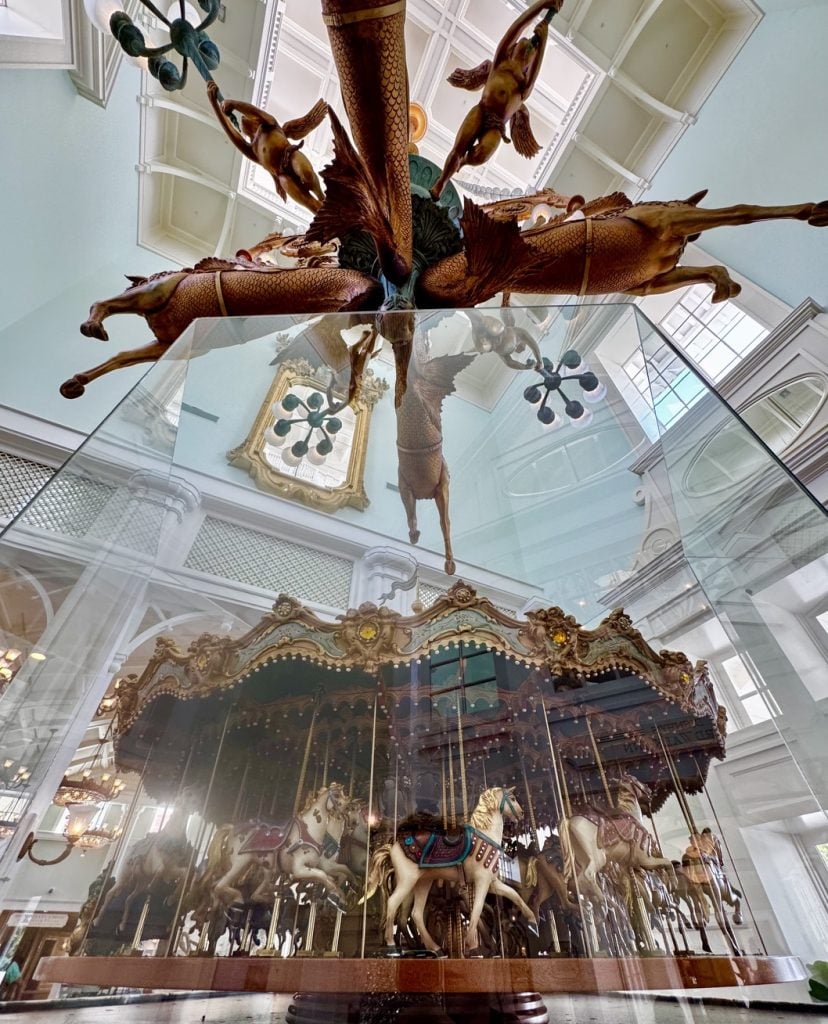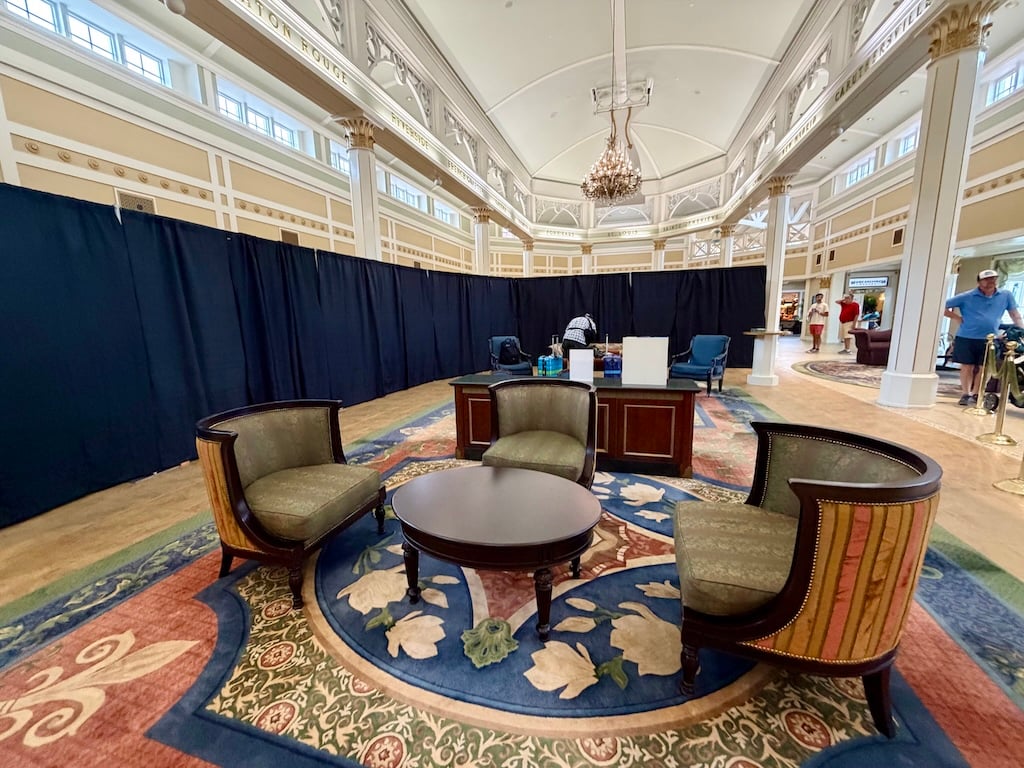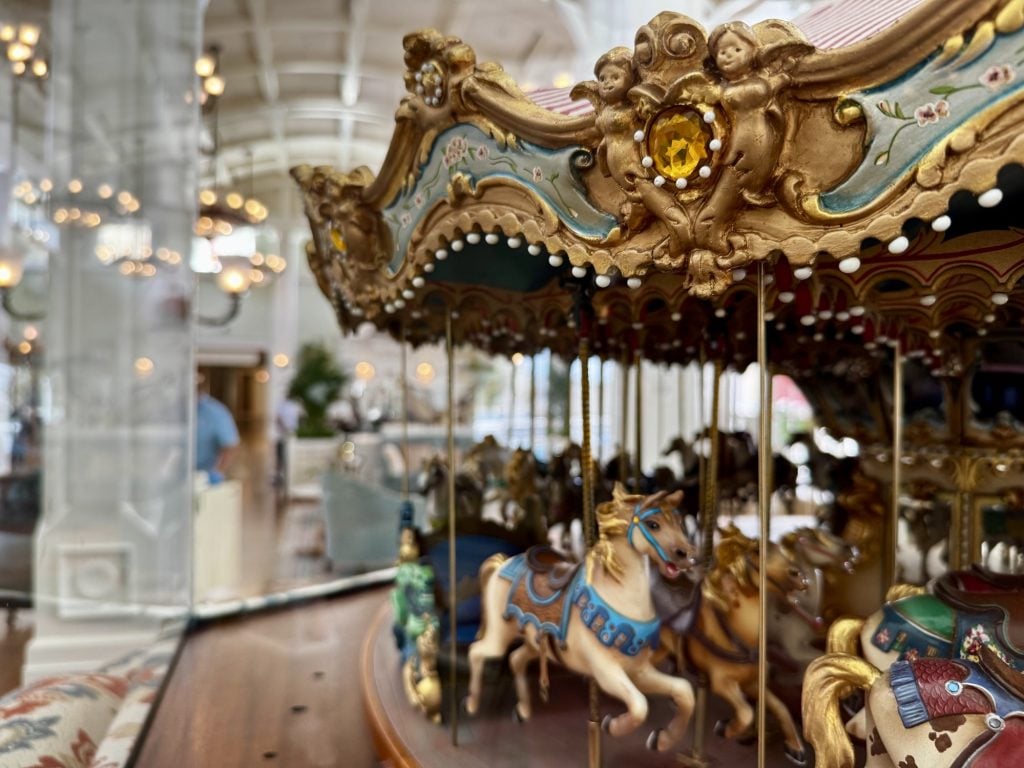
It looks like just another beautiful display in Disney’s BoardWalk Inn lobby, but tucked beneath the resort’s soaring chandelier is a piece of carousel history with a story that stretches back more than a century.
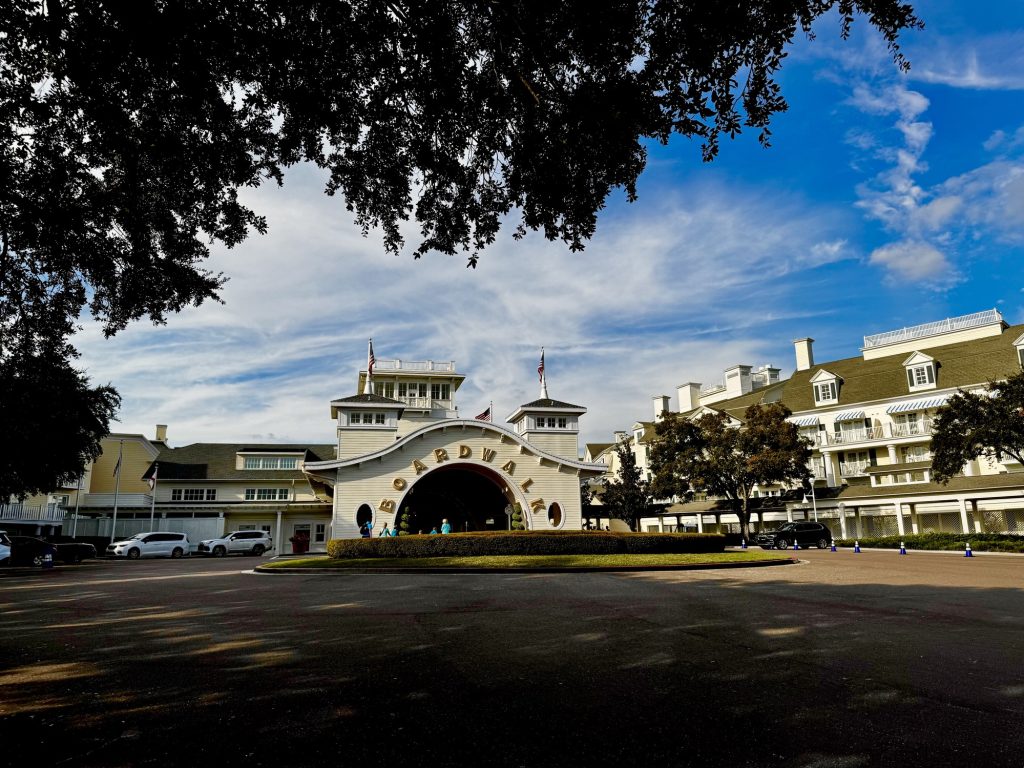
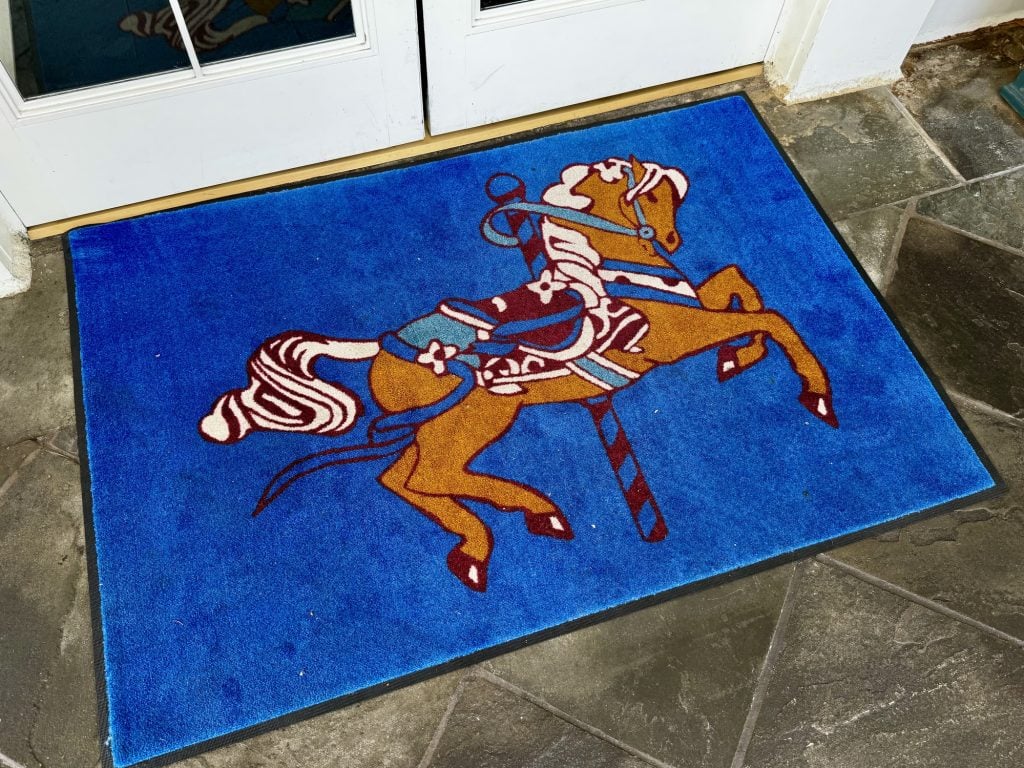
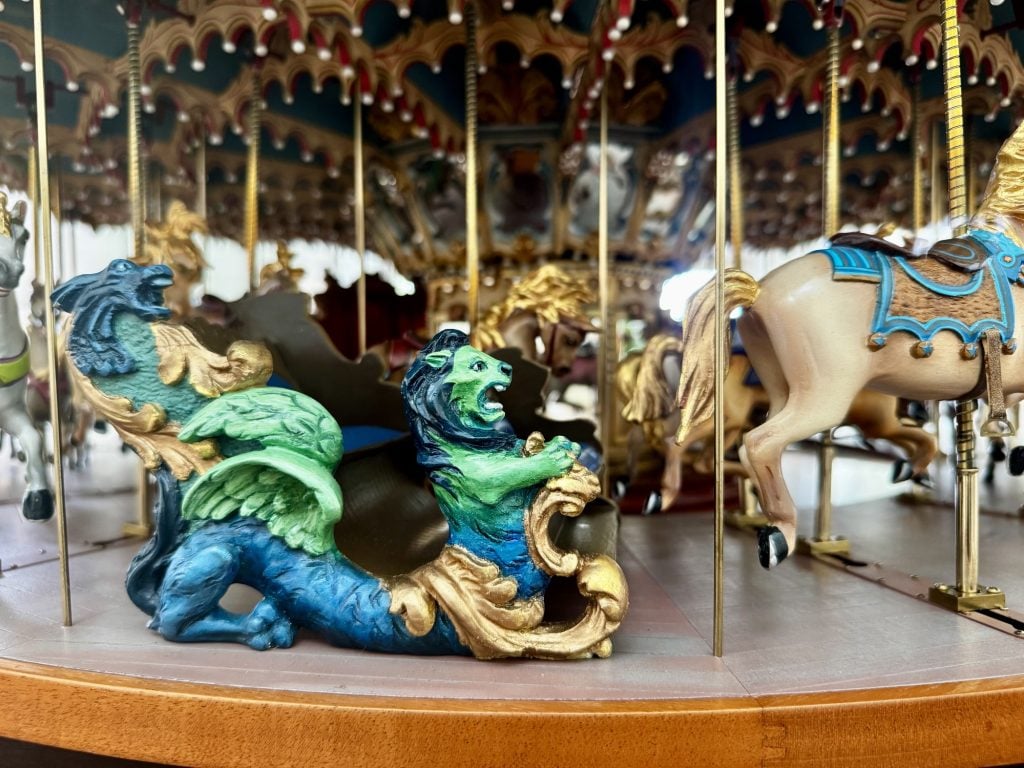
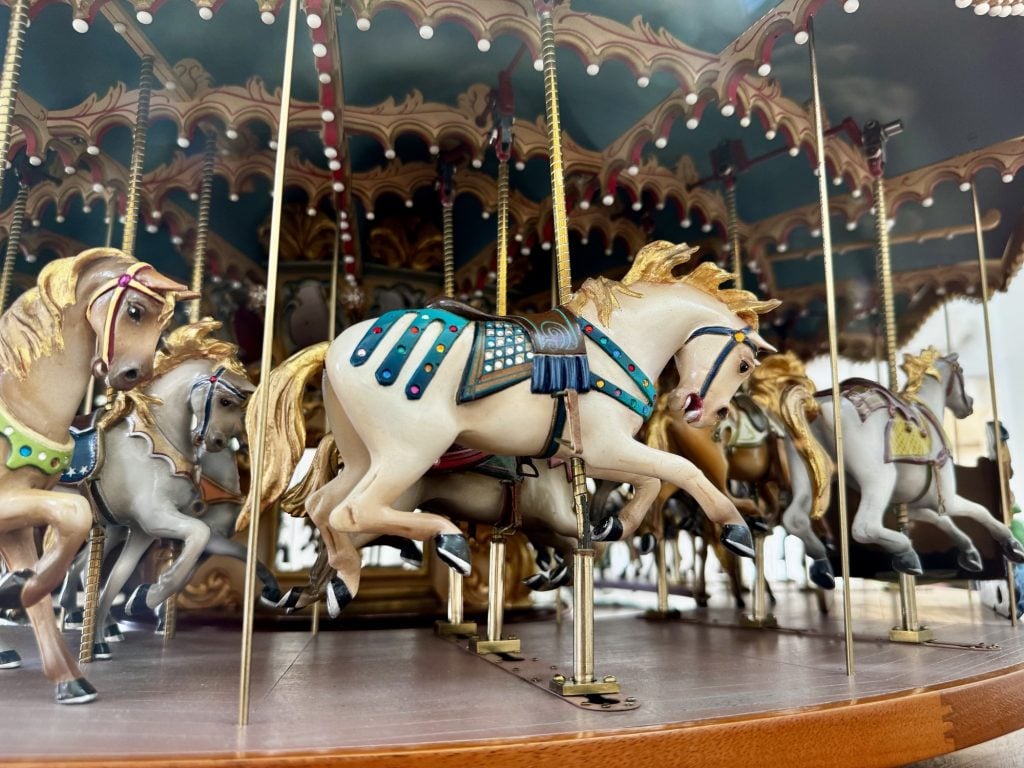
While Disney’s BoardWalk is filled with nods to vintage seaside amusement parks — including carousel horses featured in the resort’s décor, artwork, carpets, and merchandise — the resort itself has never been home to a full-sized carousel. Instead, you can find a painstakingly restored miniature carousel that quietly spins to life for a few minutes around the top of every hour.
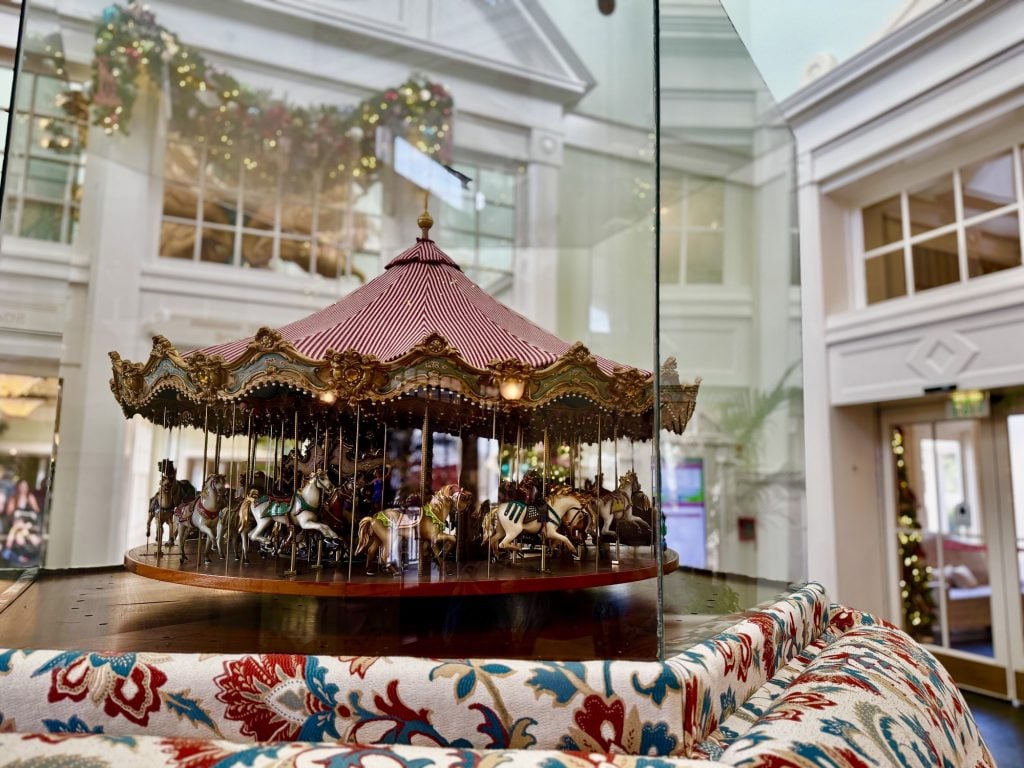
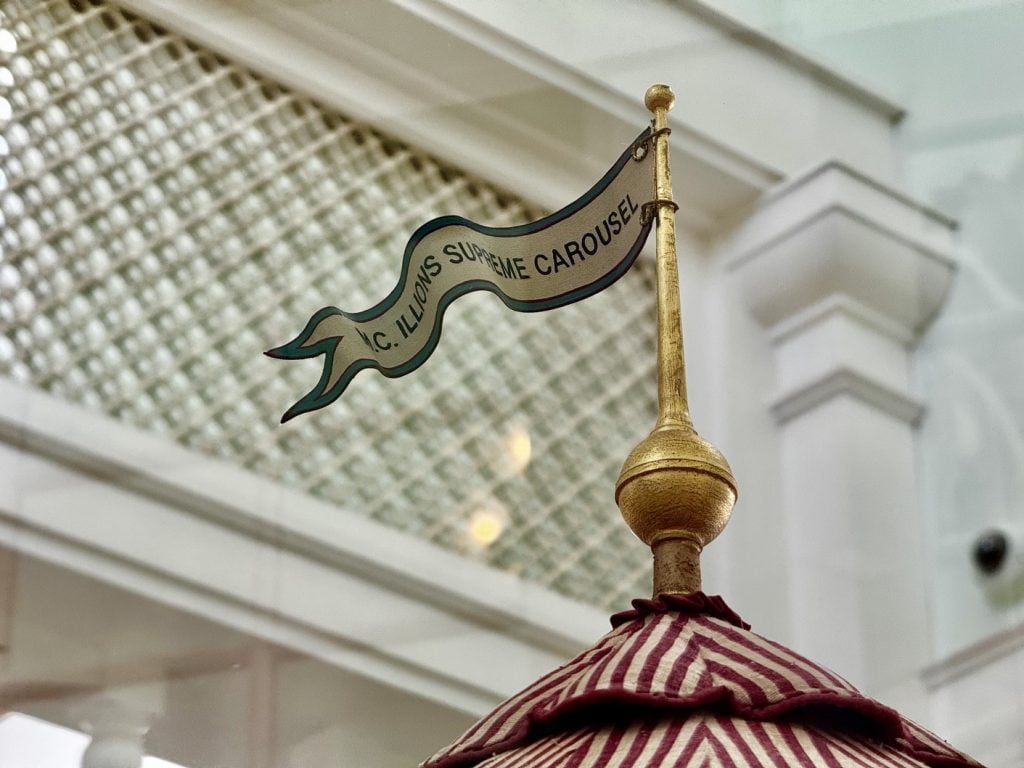
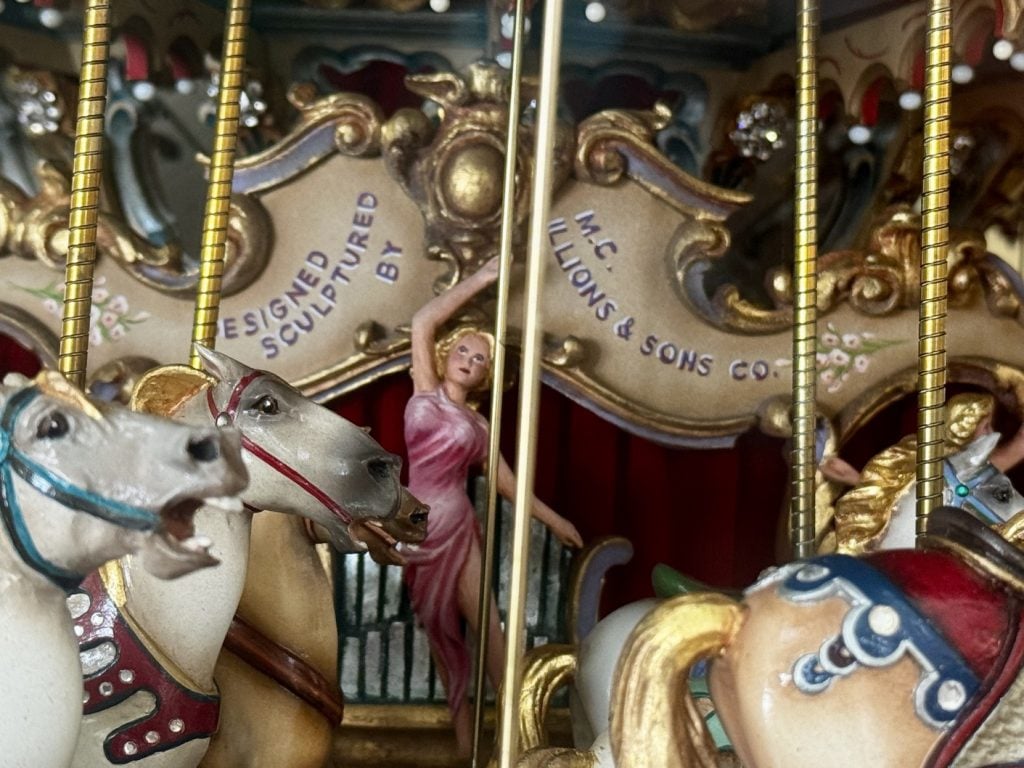
Originally built by renowned carousel maker M.C. Illions in the 1920s, the miniature was created as a sales model, allowing prospective buyers to see the craftsmanship and design of Illions’ full-sized carousels before making a purchase. Years later, the model was auctioned and eventually acquired by The Walt Disney Company.
When Disney’s BoardWalk Inn opened in 1996, the carousel became the centerpiece of the lobby. According to former Disney Imagineer Justin Jorgensen, bringing it to life involved much more than some new paint. Jorgensen is an artist, as well as the founder of DAPPER DAY Events & Designs. He’s someone I’ve had the pleasure of getting to know over the years.
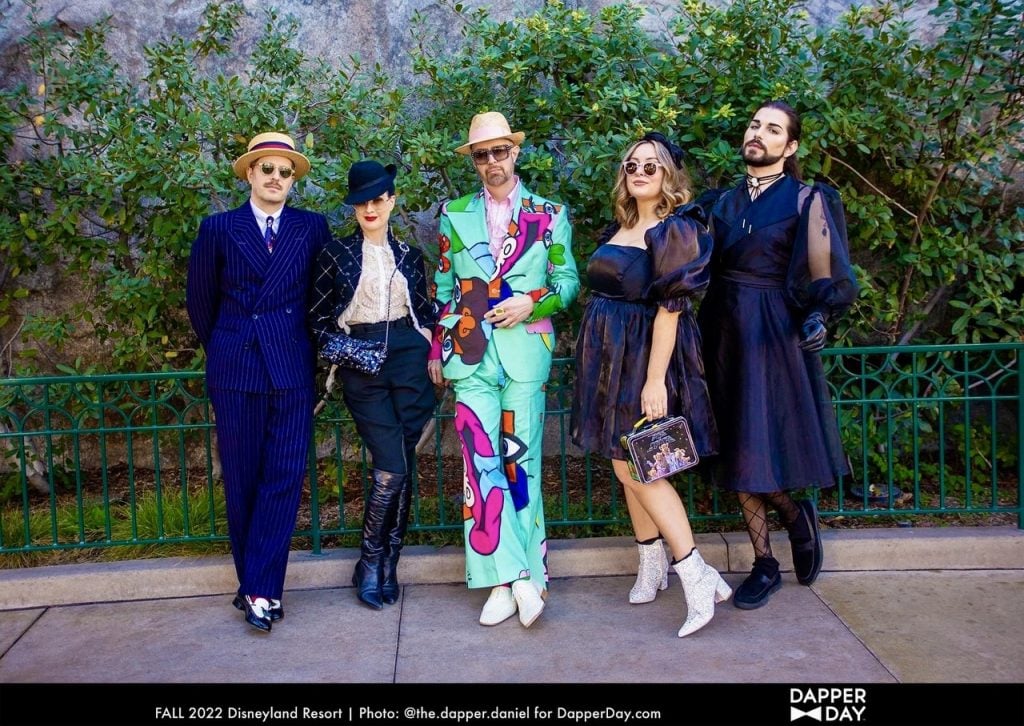
— Jorgensen at center (…that’s me with the Pigs in Space lunchbox)
During a recent conversation, he reflected on the process of restoring the BoardWalk Inn’s miniature carousel and the many details that went into creating its final presentation. “The whole thing was conceived as one whole unit,” Jorgensen recalled. “It wasn’t just restoring a carousel and putting it on a little poof.”
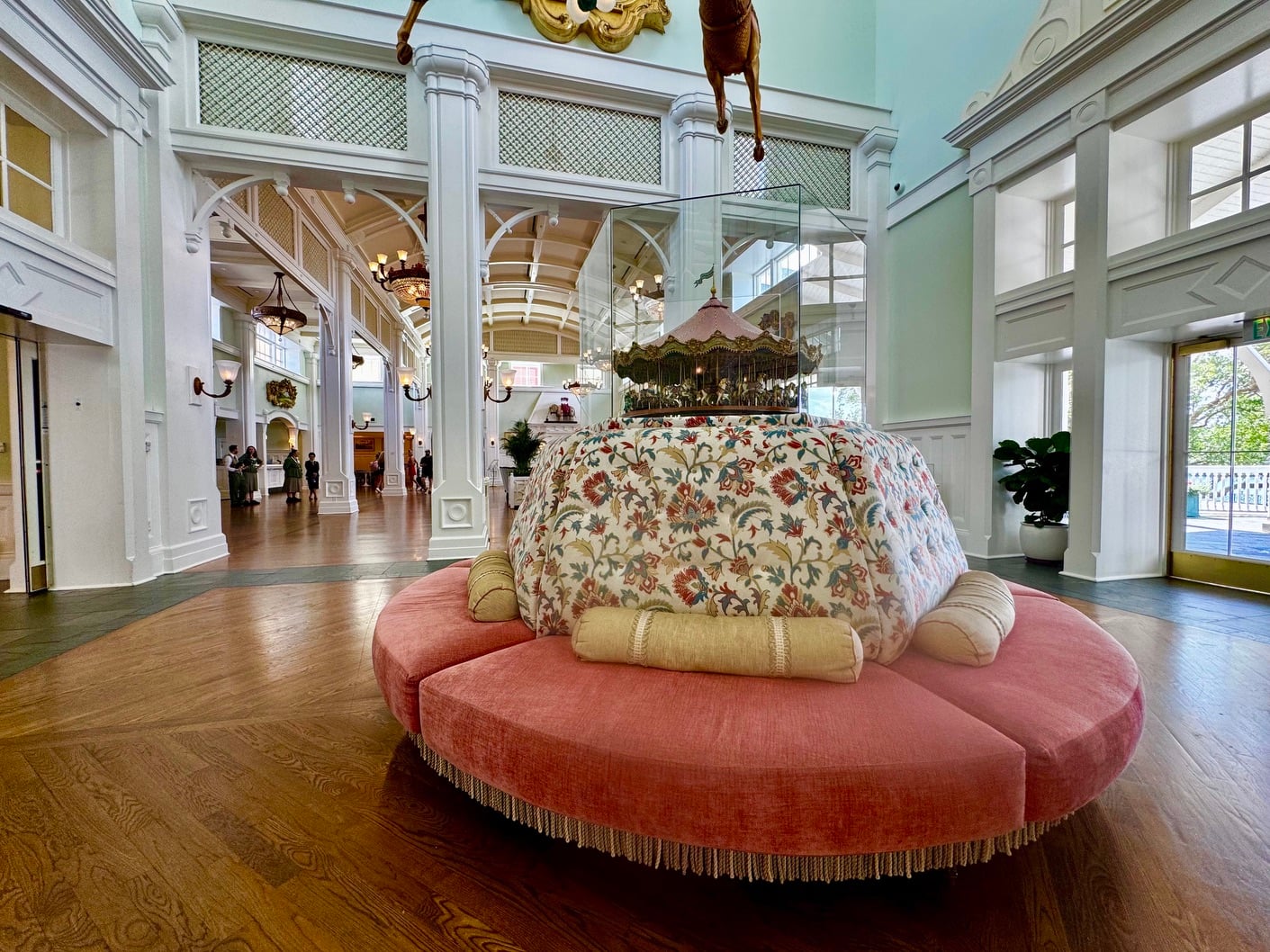
Jorgensen spent nearly two years working on the project at Walt Disney Imagineering. By the time he joined the team, Disney had already selected the carousel’s location inside the BoardWalk Inn lobby. Nearly everything else — from the custom display, bench, and presentation to the restoration itself — was still to come. All of the work was completed inside Walt Disney Imagineering’s model shop.
Jorgensen’s path to Imagineering was unusual. While studying scenic design at CalArts, he caught the attention of then-head of project management Mike Morris, who hired him before he had even completed his coursework. Although they didn’t know it at the time, Jorgensen brought valuable experience from helping his mother restore antique furniture, learning techniques for stripping finishes and carefully preserving intricate details.
As layers of old paint came off, the craftsmanship underneath became even more impressive. Jorgensen remembers thinking it was a shame to repaint the horses because the raw carvings were so beautiful, revealing different grain patterns and expertly joined pieces. Using paint strippers meant wearing three layers of gloves, yet the chemicals would still seep through. “I’d have to run my hands under cool water,” he recalled. Eventually, he found a more natural stripping method that was both safer and just as effective.
Not every horse on the carousel was original. At least five figures had been replaced over the years and weren’t carved by M.C. Illions himself. After the original paint was removed, damaged horses (including broken legs and missing details) were sent to sculptor Adolfo Procopio for repairs, who had a 35-year long career sculpting for WDI. Conveniently, his own studio was located near Imagineering’s model shop.
Once repaired, molds were made from several horses. That’s why you may notice a handful of duplicate figures today. Originally, each horse had been individually hand carved, making every one unique.
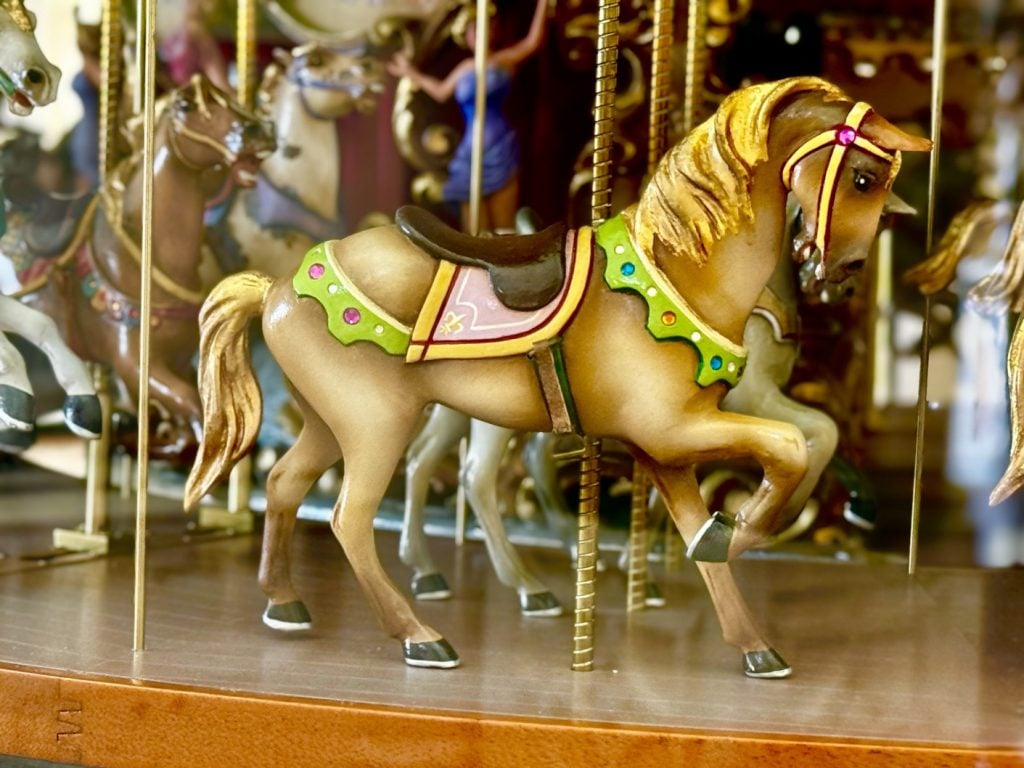
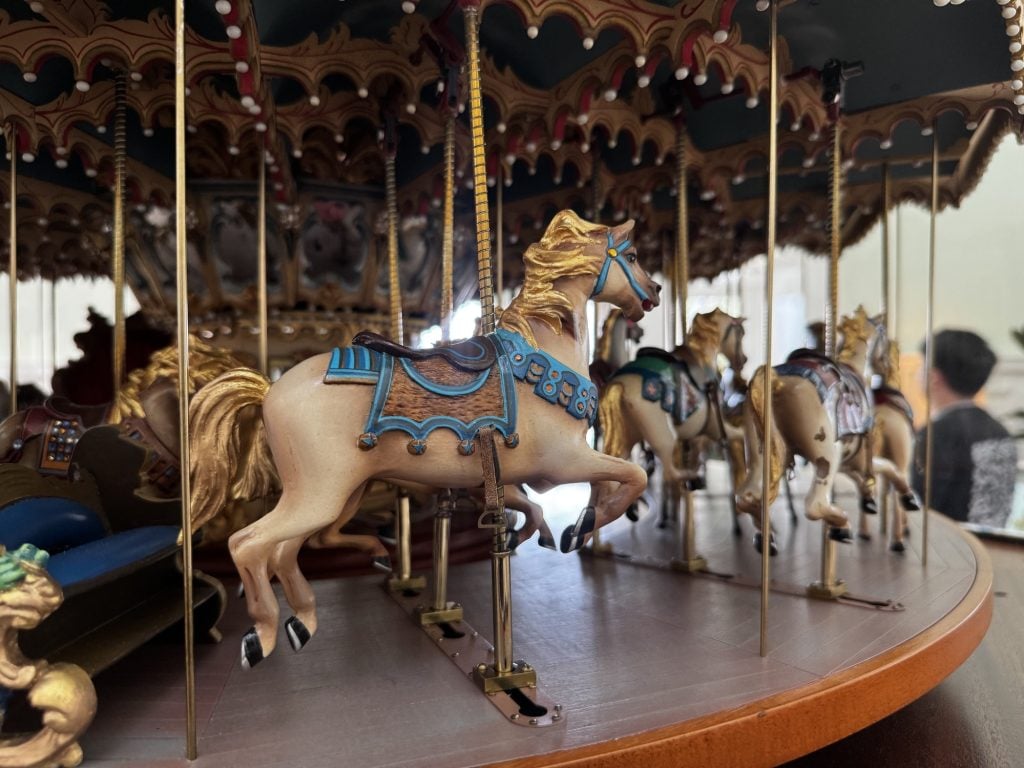
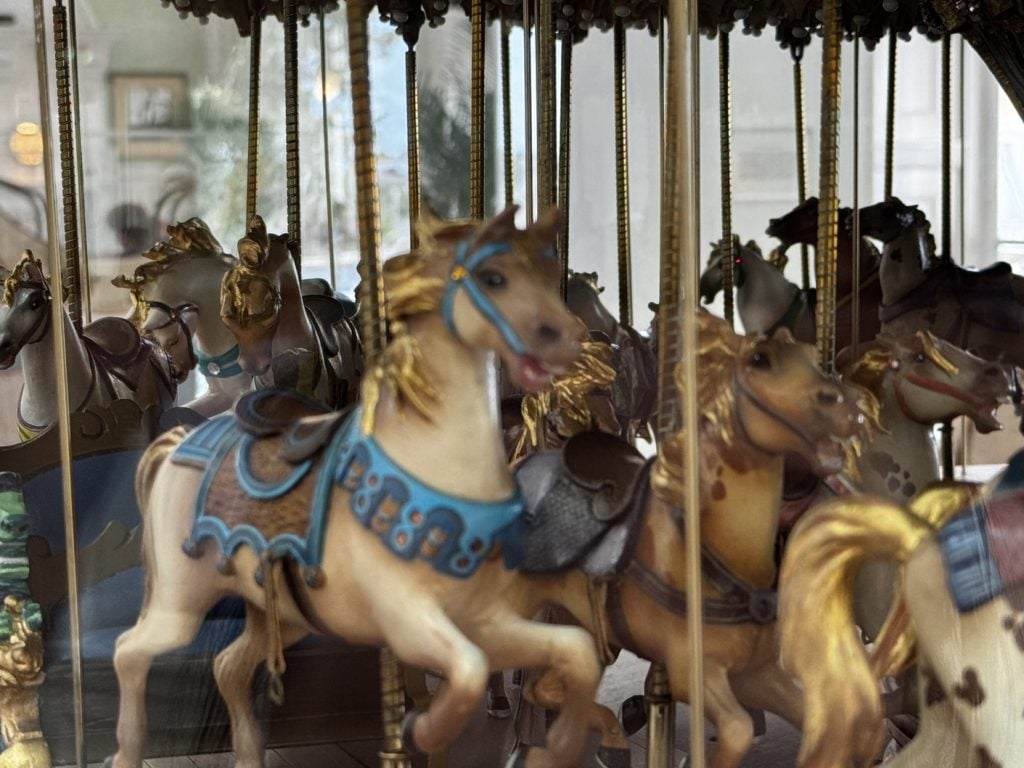
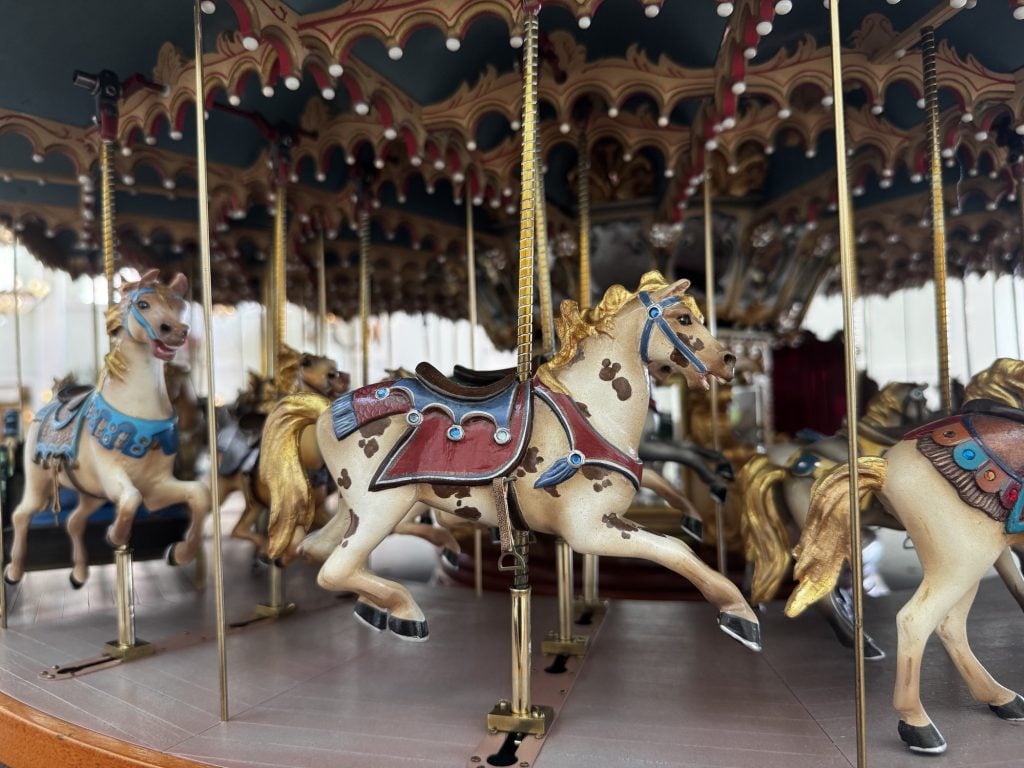
The carousel was also restored with careful attention to how a real merry-go-round operates. The horses gradually become smaller toward the center, just like on a full-sized carousel. To recreate an authentic rotation speed, Imagineers even visited Disneyland and timed the King Arthur Carrousel, scaling the miniature’s movement to match.
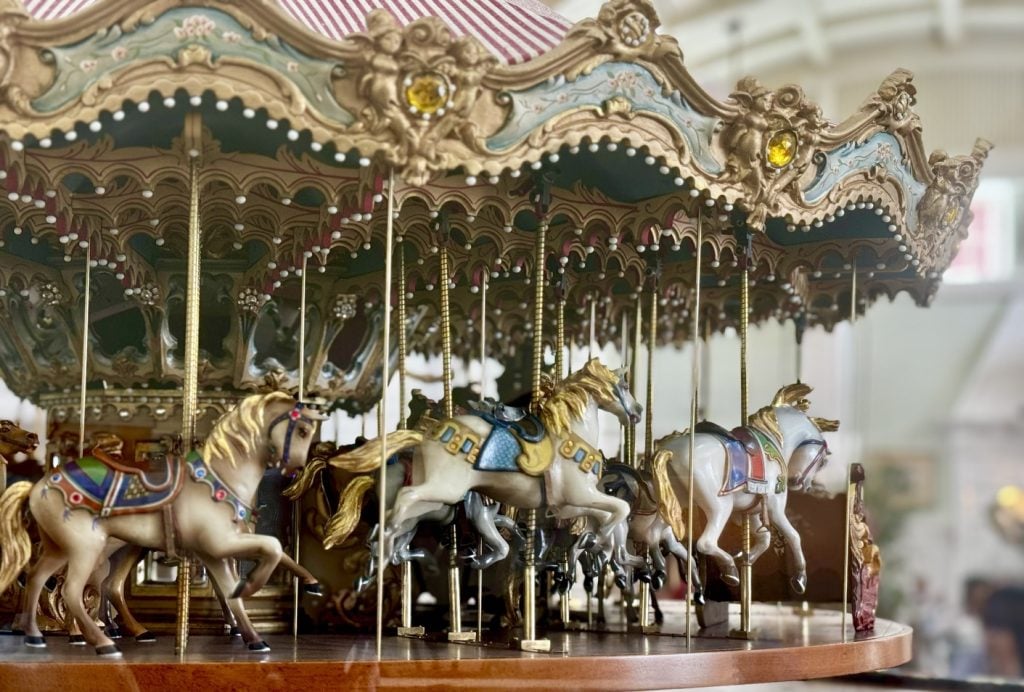
Jorgensen said the team aimed for a restored-but-lived-in appearance, preserving subtle signs of age, including the weathered floorboards. Other original details remain throughout the piece, from the painted sky filled with clouds and cherubs beneath the canopy to the ornate center panels that conceal where a carousel organ would normally sit.
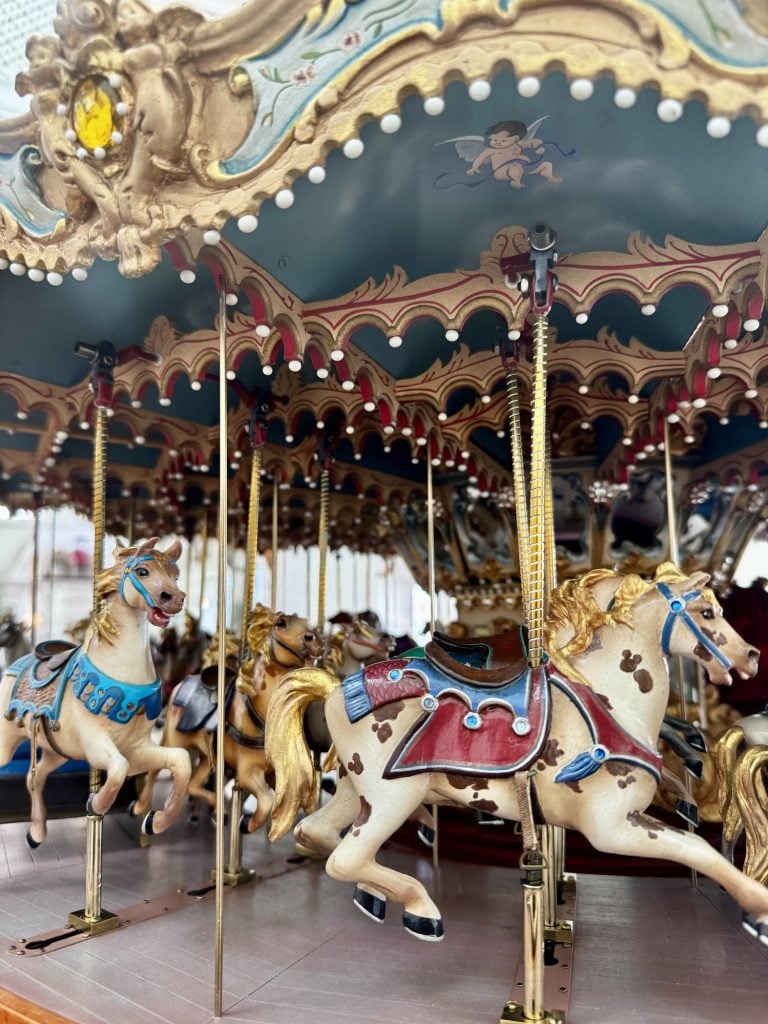
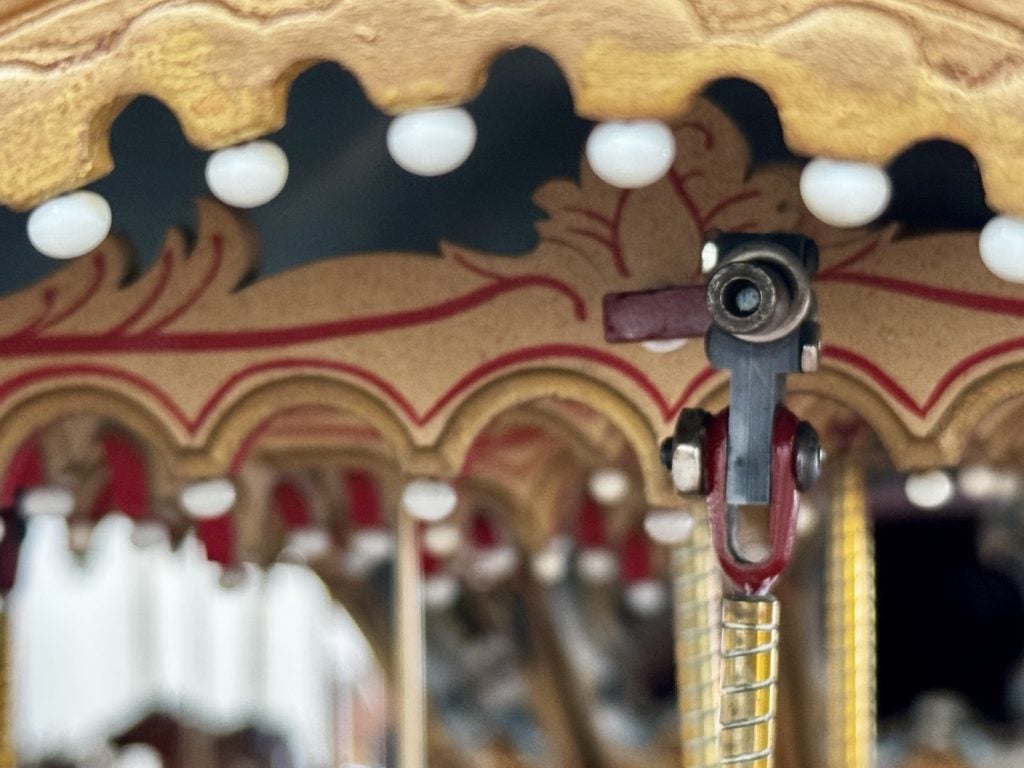
Many decorative elements also survived the restoration. The tiny glass “light bulbs” circling the carousel are the original handcrafted glass beads created specifically for the model decades ago. Jorgensen personally completed all of the gilding using genuine 24-karat gold leaf.
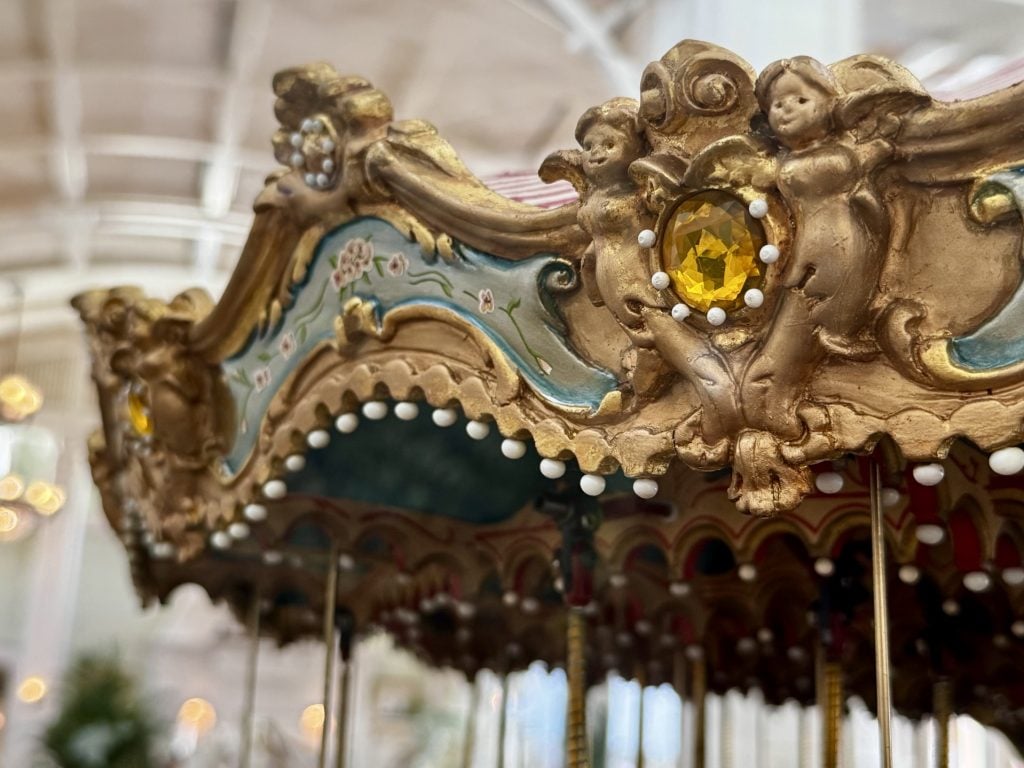
He also painted the two miniature benches flanking the carousel, intentionally giving each one a different warm and cool color palette to create visual balance.
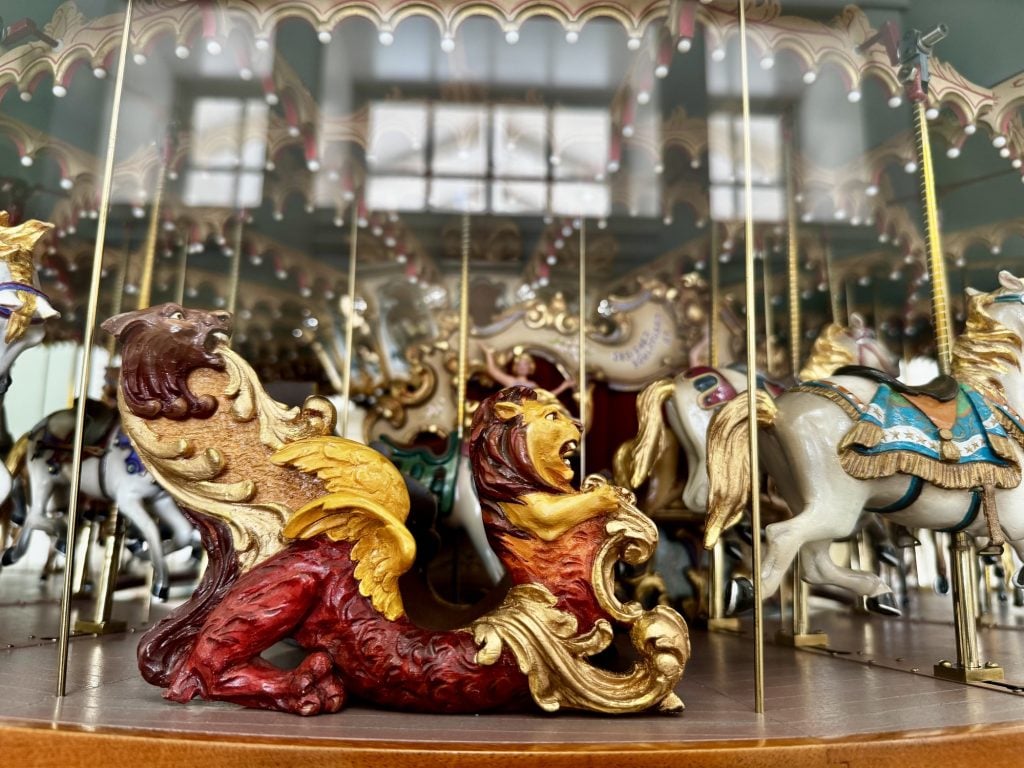
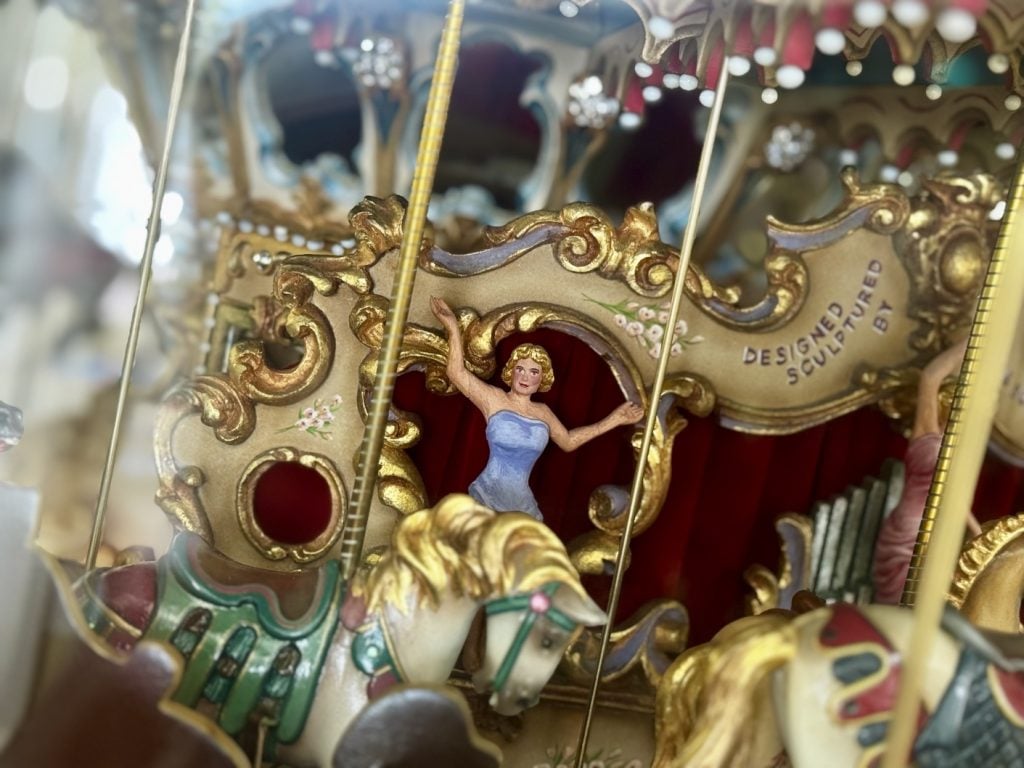
Jorgensen said the two tiny female figures decorating the carousel were originally topless (gasp). New sculptures were created for the BoardWalk installation before the carousel went on display at Walt Disney World.
Among the dozens of horses, one stands out from the rest: the lead horse is white and decorated with more rhinestones than any other figure.
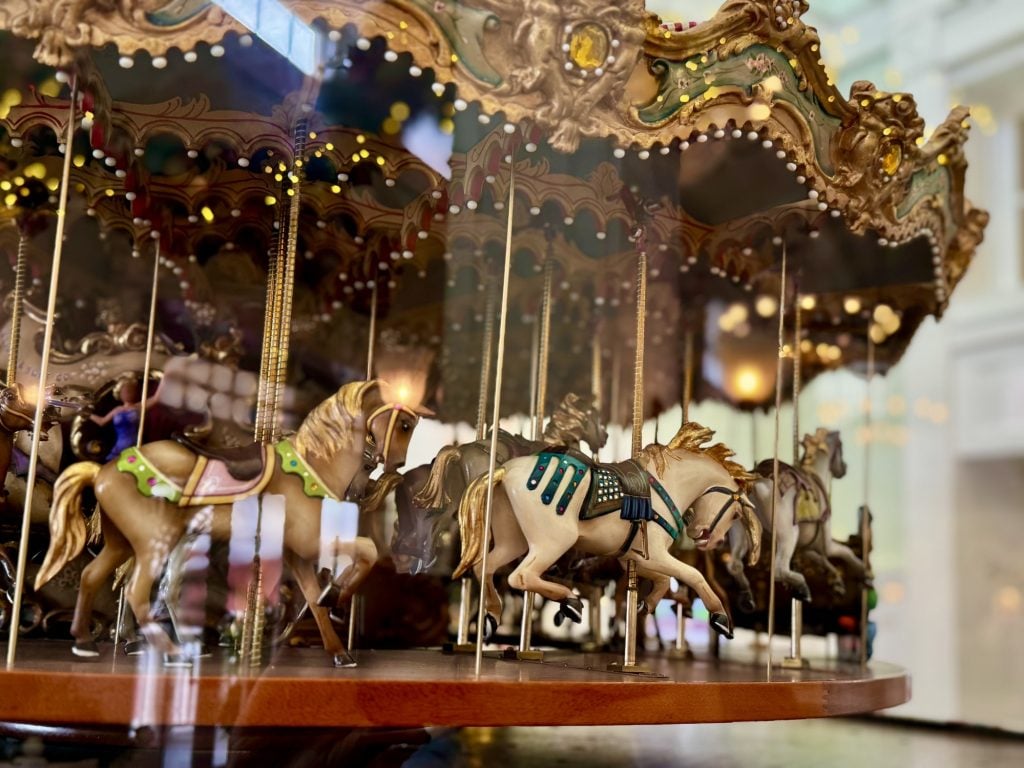
Today, most visitors pass through the BoardWalk Inn lobby without realizing the level of artistry and restoration behind the display. Yet around the top of every hour, the miniature carousel comes to life for a few moments… a small, spinning piece of history and a reminder to pause and appreciate those often-overlooked details that help make Disney so special.