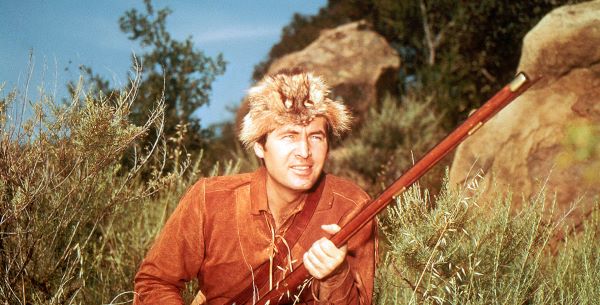
Disneyland’s Frontierland has had two attractions based on the Walt Disney’s hit Davy Crockett television mini-series – the Davy Crockett Indian Canoes and the Mike Fink Keel Boats. There were even life-sized wax figures of Davy Crockett and Georgie Russell in Frontierland’s Davy Crockett Arcade before being moved to the Fort Wilderness Regimental Headquarters on Tom Sawyer Island in 1956.
Ironically, one of the biggest hits of Walt’s Disneyland television series came close to never being produced. When Walt’s team was researching topics for the Frontierland segments of the series, they came up with a list of famous Americans for Walt to review. However, Walt rejected most of them as being improper for his show. Walt insisted anyone featured on his show had to be a hero.
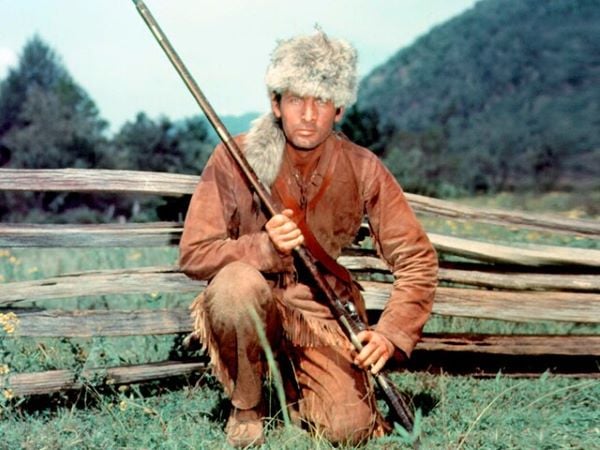
After several more months of research, the production team had not made any progress on selecting a suitable subject and Walt was growing impatient. He finally called a meeting with the goal of settling the issue. Knowing they needed to respond, the team quickly picked a person. In an interview, producer Bill Walsh said their choice was a happy accident, “We were planning to do a series on American folk heroes – like Johnny Appleseed, Daniel Boone, and Bigfoot Wallace. And the first one we pulled out, by dumb luck, was Davy Crockett.”
As was typical for Walt, he then took a personal interest in the casting of the Davy Crockett show. Well-known actor Buddy Ebsen was Walt’s top choice for Davy Crockett until he saw the science fiction film Them! because someone had suggested James Arness as a potential Davy. But an actor playing a minor role in the film caught Walt’s attention – a lanky, 6 foot 6 inch Texan named Fess Parker. A short time later, Parker became the first actor to sign a long-term contract with the Walt Disney Studio.
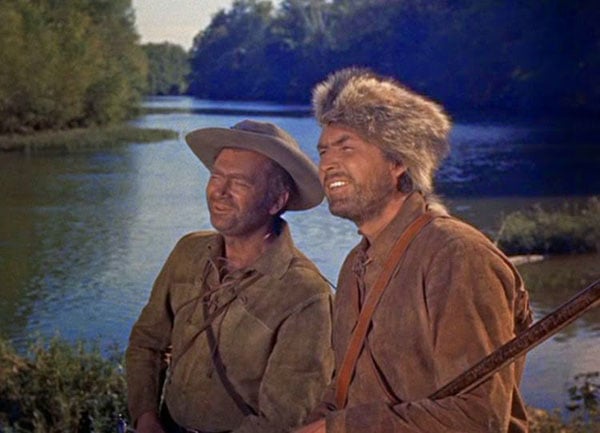
And, of course, you know who was cast as Davy’s sidekick Georgie Russell. Yes, you guessed it, that well-known actor Carleton Carpenter. What, you say? Yes, Carleton Carpenter. However, Walt and his team changed their mind at the last minute and Carpenter was dropped shortly before filming was scheduled to begin. Buddy Ebsen, Walt’s original choice to play Davy, agreed to accept the role of Georgie Russell and arrived at the North Carolina film location the day before shooting was scheduled to begin.
One of the most memorable aspects of the Davy Crockett series was its theme song, The Ballad of Davy Crockett. This song was created out of necessity after the first episode was completed and it was approximately five minutes shorter than needed. Bill Walsh recalled, “It was panic time again. Unless we padded the show, we would run short. I finally decided we could pad it by using the original storyboard sketches as a prologue to the film. Walt liked the idea but thought that it needed something extra. Something like music. In a flash, I was on the phone to Tom Blackburn, who had written the script. I told him we had to have a song to accompany the drawings. Could he write one? Tom nearly passed out. He stammered for a moment and said, ‘Hell, I’ve never wrote a lyric in my life.’ We told him it didn’t matter, we needed a song – any song. He said, ‘Okay, if you’re that desperate.’ He and George Bruns, who composed the score, went down the hall. They came back in about twenty minutes and said, ‘Well, this isn’t’ much.’ And they began, ‘Born on a mountain top in Tennessee…” My first reaction was, ‘That’s supposed to be a song?’ I thought it sounded pretty awful, but we didn’t have time for anything else.”
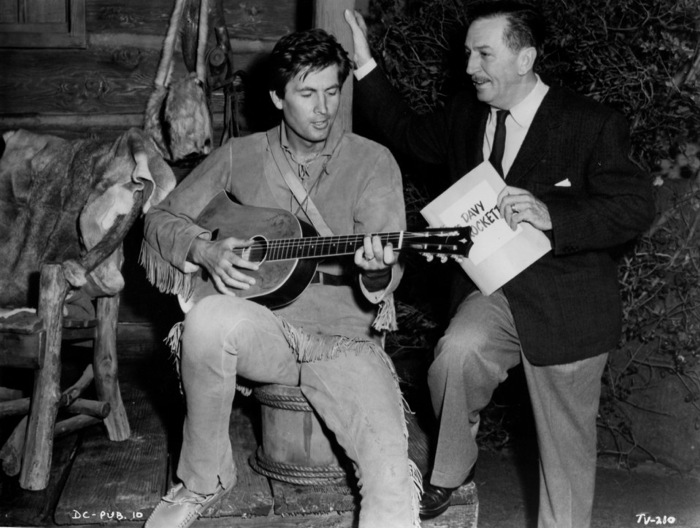
The Ballad of Davy Crockett would go on to become one of the most popular pieces of music ever written for television. The Ballad of Davy Crockett would be used throughout the whole Crockett series and grow to have twenty verses.
After the three Crockett episodes aired, Walt was surprised by their success. Walt later said, “We had no idea what was going to happen on Crockett. Why, by the time the first show finally got on the air, we were already shooting the third one and calmly killing Davy off at the Alamo. It became one of the biggest overnight hits in TV history, and there we were with just three films and a dead hero!”
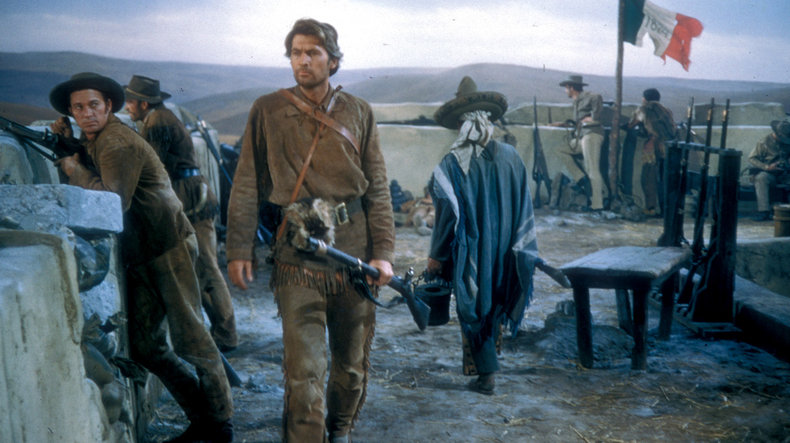
Even though Davy died in the final episode, the public wanted more episodes about Davy. Walt disliked repeating himself. In a March 15, 1955, interview, he seemed determined that his Crockett saga was over when he said, “I didn’t want to crawl into the hole of doing a series. There are too many good stories around. Besides, it was a matter of history. Everybody knows Davy Crockett dies at the Alamo. I wasn’t going to tamper with history.”
However, after the final episode aired, Walt made an announcement that stunned both the television and film industry. Due to the popularity of the shows, he said his studio was going to combine the episodes into one story and release it in the United States as a feature film. This was astonishing. No one had ever attempted to have the public pay to see something already available to them for free on television.
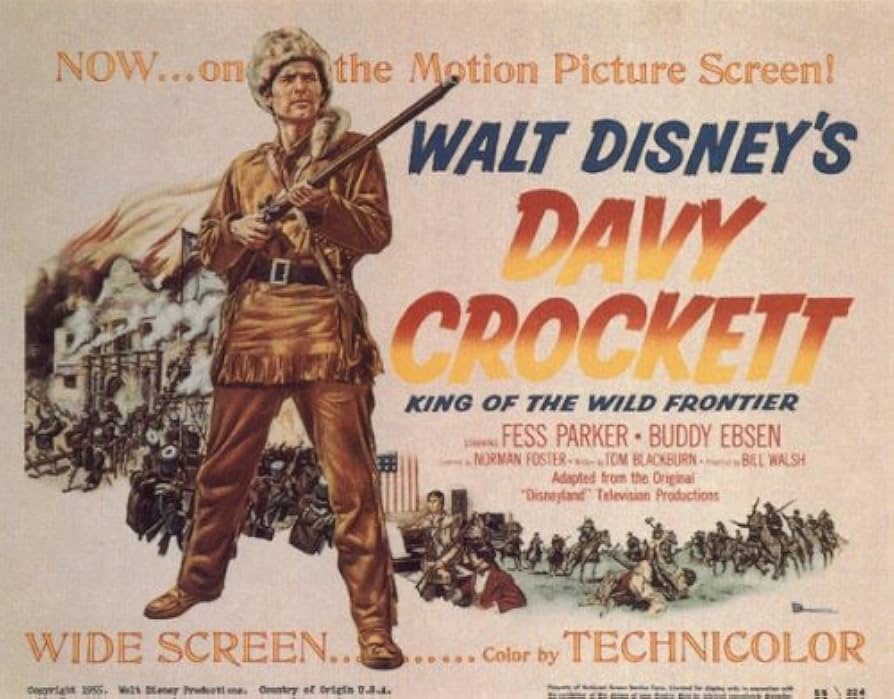
Davy Crockett, King of the Wild Frontier was released in more than 1,300 theatres on May 25, 1955. Its box office returns totaled $2.5 million. Not bad considering the television episodes had been viewed by 90 million people.
A year later, Walt gave in to public demand and decided to bring back Davy in a story taking place prior to the Alamo by reworking a story already in development about Mike Fink, a legendary Mississippi keelboater, and incorporate Davy into the story. There was no evidence that Davy and Mike Fink had ever met. But as one studio staff member said, there was no evidence they hadn’t.
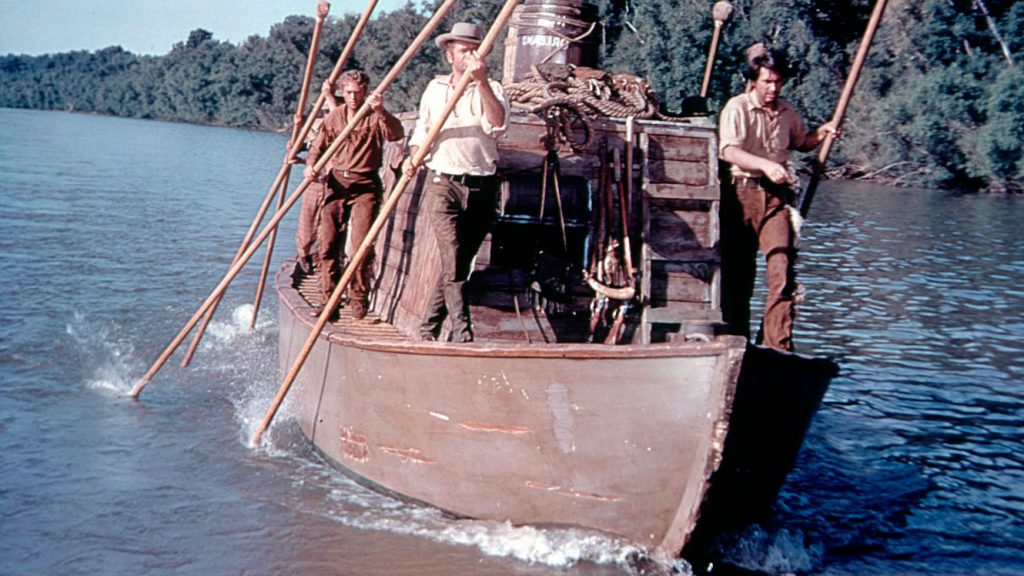
The original Mike Fink story was reworked into a new story titled Davy Crockett and the Rivermen, which was then turned into two episodes, Davy Crockett’s Keelboat Race and Davy Crockett and the River Pirates.
After airing on television, they were edited and released theatrically on July 18, 1956, but brought in less revenue than the previous film. Walt knew the Crockett craze was over and retired Davy Crockett.
By this time, the Davy Crockett television series and theatrical films helped sell $300 million in merchandise including 4 million records, over 14 million books, and an astonishing number of coonskin caps.
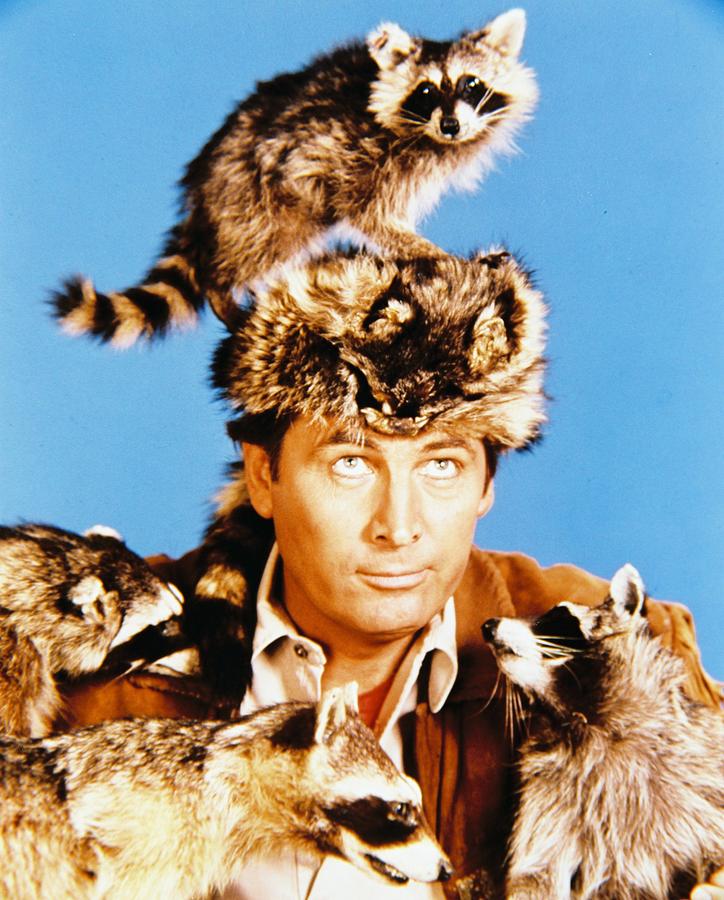
With the success of the first three episodes of the Davy Crockett television mini-series and the theatrical release of Davy Crockett, King of the Wild Frontier, it was inevitable that Davy Crockett and Georgie Russell would appear in Disneyland.
Whilst filming the last two segments of Davy Crockett in Kentucky, which would have been Davy Crockett’s Keelboat Race and Davy Crockett and the River Pirates, they were contacted about appearing on live television for ABC. Parker and Ebsen were to dance and sing for the live opening day telecast of Disneyland.
Parker and Ebsen worked with choreographer Merriam Nelson on the performance they were to give. All went somewhat well when they were practicing on flat, hardwood floors but learned it is very different when dancing on the boardwalk planks and dirt of Frontierland for the park’s opening day. Disneyland’s opening day was very hectic. There was little time for rehearsal. Parker later said he had never seen such crowds before.
After the broadcast, Walt invited Parker and Ebsen to join him in his apartment above the Main Street Firehouse for a drink. Parker recalled, “There wasn’t any agenda. We were just sort of his ‘side men.’ At that point he was wearing a sport shirt, and once in a while he’d put on his little hat and go out there. He would just stand and let people come up and speak to him. He really, truly was happy to see his hopes and beliefs succeeding right before his eyes. You know, we often see athletes when they’ve won an Olympics championship or some other tremendous athletic accomplishment … there’s a way that people look when they’ve reached a certain goal. Walt was in that kind of elevated state on that day.”
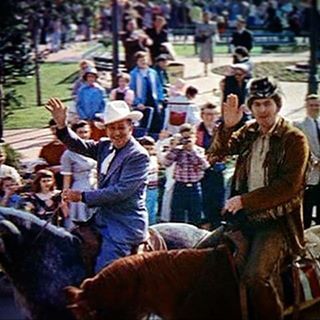
Walt also invited Parker to ride with him as Davy Crockett in parades at Disneyland. The two horses they rode were Walt’s old polo ponies. Parker and Ebsen also made several unscheduled rides and appearances at Disneyland in its first year.
The Davy Crockett shows were rebroadcast on NBC in the 1960s after Walt moved his program to that network. The 1960 rebroadcasts marked the first time the programs had actually been shown in color on TV.
In 1971, Disneyland renamed their Indian War Canoes attraction to Davy Crockett Explorer Canoes, with the guides wearing the iconic Coonskin caps.
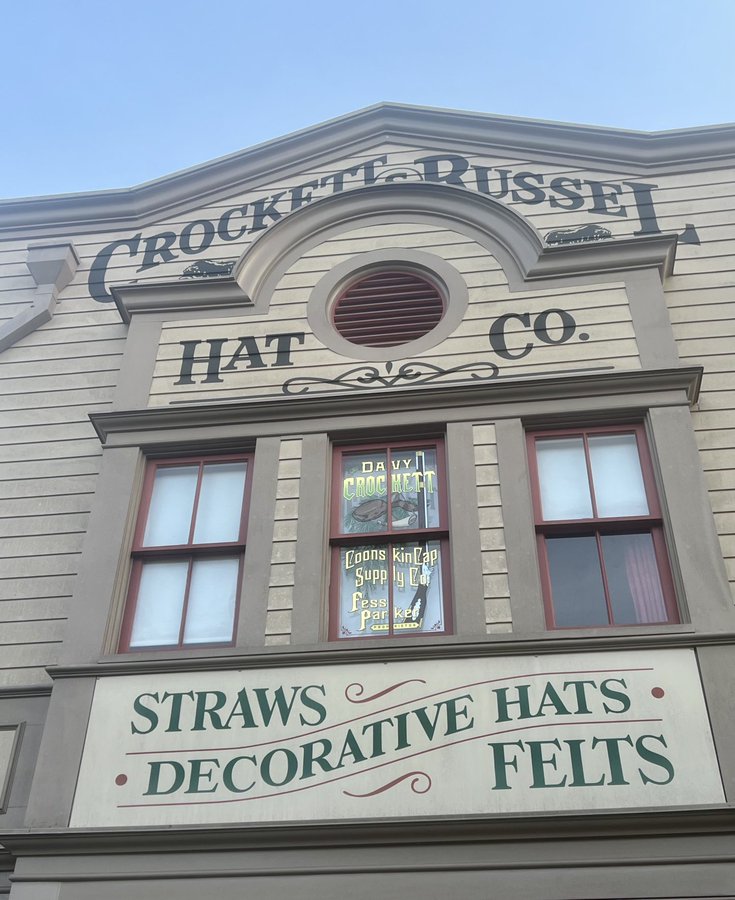
Fess Parker was named a Disney Legend in 1991 and was also honored with a tribute window in Disneyland’s Frontierland. It is located at the former American Buffalo Hat Co. facade, which was renamed the Crockett & Russel Hat Co. in 2004 to honor both Fess Parker and Buddy Ebsen. Parker’s window reads “Davy Crockett/Coonskin Cap Supply Co./Fess Parker/Proprietor.” Although Buddy Ebsen was named a Disney Legend in 1993, he has not yet received a tribute window.
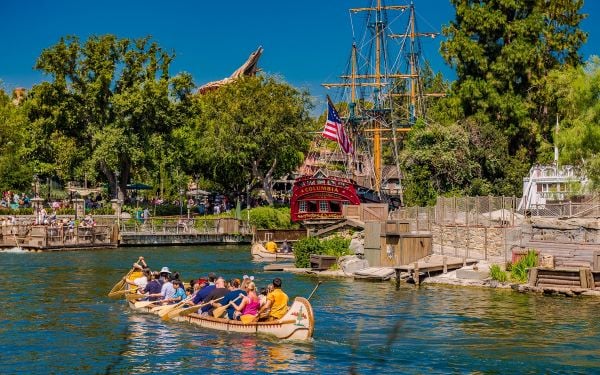
Even though the Disney Crockett craze has subsided, the impact of television’s first mini-series continues to be felt today. We still have the Davy Crockett Explorer Canoes at Disneyland, and there is the Disney Davy Crockett Ranch at Disneyland Paris which is similar to Disney’s Fort Wilderness and Campground at Walt Disney World.
There are schools named for Davy Crockett, statues of his likeness, and memorials to his life that came about after the episodes aired. Plus, several historians were motivated to write about Davy Crockett’s life and point out the inaccuracies of the Disney films.
Both Davy Crockett, King of the Wild Frontier and Davy Crockett and the River Pirates theatrical films can be viewed on Disney+.
So, the next time you walk through Disneyland’s Frontierland, remember you are walking in the footsteps of Davy Crockett and Georgie Russell.
If you would like to hear more stories about Walt Disney, the Davy Crockett mini-series, and Disneyland, listen to our episode Connecting with Walt: Davy Crockett Goes to Disneyland.