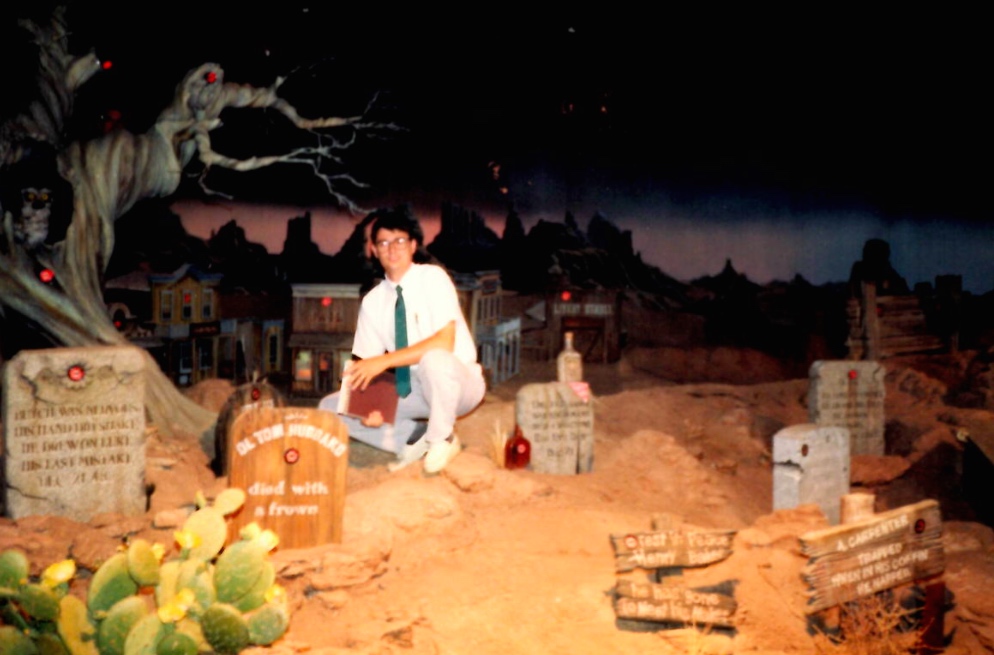
While his name might not be as familiar as Marty Sklar or Tony Baxter, former Imagineer Hugh Darley did leave his mark on the Disney parks. I had the chance to talk with Hugh Darley on the phone on April 22nd, and he had some amazing stories to tell. Naturally, I was very curious to know how he became an Imagineer, and then why he left the Walt Disney Company. He had some incredible responses that I think any true Disney fan will think are extremely fascinating.
Becoming an Imagineer
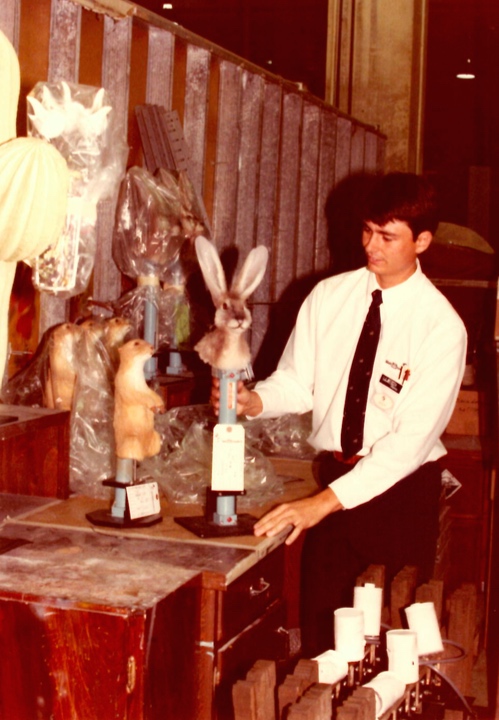
The first question I asked Hugh was, “What inspired you to want to be a Disney Imagineer?” His response was, “I was 11 years old watching the Wonderful World of Disney in January of 1968. They had a program on the making of Pirates of the Caribbean. It had just opened a year earlier in Disneyland. I was watching Imagineer Wathel Rogers describe how audio animatronics work…Wathel Rogers and Walt Disney were showing how they built some of the animatronics. I knew right after watching that program that that was what I wanted to do. I told my parents, and I started a career path to allow me to be an Imagineer.”
 Photo Credit: disney.wikia.com
Hugh Darley and I talked about the beginning of his time at Disney. He said that he was young and ready to learn from the great Disney Imagineers, some of which had worked with Walt Disney himself. He explained, “When I came to Disney I was young. In fact, I was in my young 20s. They had not hired whole generations of people ahead of me. My mentor was Wathel Rogers. That’s the guy that I had watched on the TV show when I was 11 years old. I’m sitting in my cubicle in Florida, and Wathel Rogers walks in and says ‘Hi Hugh, I’m Wathel Rogers.’ It brought tears to my eyes.”
Hugh seemed genuinely fortunate to have worked with some of the original Imagineers that he had looked up to. Having the opportunity to learn under the men who had shaped the company up until that point meant a lot to a young Hugh Darley. Few people achieve the job they dream about as a child, but Hugh achieved that dream, and got to work under the men that he looked up to. He explained, “I got to work with him, John Hench, Marty Sklar, and many of the original Imagineers. They didn’t hire the generation before me…so if you were my generation you had the great opportunity to work with the original Imagineers.”
Walt Disney once said “We keep moving forward, opening new doors, and doing new things, because we’re curious and curiosity keeps leading us down new paths.” I believe when Disney is at its best, it is at the forefront of technology. When the Walt Disney Company stays true to Walt’s quote of looking for new things, it usually leads to some incredible results. Hugh Darley had the chance to be on the ground floor of some of these opportunities working as an Imagineer. He told me, “The first show I worked on was the shooting gallery in Frontierland. Our job was to replace the shooting gallery that was lead based, and change the system to a digital gun, or infrared gun. Nobody had an infrared gun. You couldn’t just call up, and order an infrared gun. So we worked with the company that invented the system.” And while I thought that was interesting, what Hugh said next blew me away: “We had also heard there was a new system for music that we could use for the shooting gallery. It was called a compact disc player. So we went to Japan and met with SONY. So me and another Imagineer came back from Japan with a SONY disc player. They were the first compact discs imported into the United States.” Darley explained that Frontierland’s shooting gallery became the first all-digital show in North America.
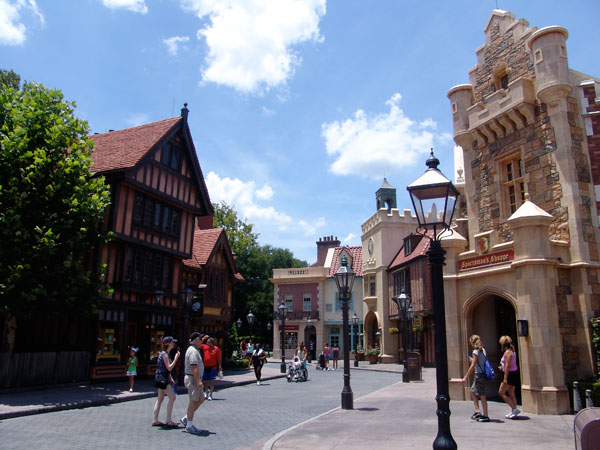
Hugh and I talked little about what other projects he worked on as an Imagineer. He said, “Some of the first things I worked on as an art director, and graphics designer was for the World Showcase at EPCOT Center.” Hugh explain that one of the primary reasons Disney brought him down to Florida was to work on the graphics and the area development for the park that was going to be opening the following year. He was there designing the landscapes of what guests see everyday in Epcot’s World Showcase. He said he specifically worked on “the Canada Pavilion, the United Kingdom Pavilion, and American Adventure.”
Hugh recollected that not everything on the drawing board ended up in the World Showcase. He explained that the Canada Pavilion looks a lot different then it did when they first drew it up. Specifically, Hugh said, “We had these monstrous redwood and sequoias built, and they probably ended up in the landfill, because they were too large. They didn’t look right because the forced perspective didn’t work when you put the trees in there.”
I asked Hugh about the three planned pavilions that were never built, which were Spain, Israel, and Africa. He said, “I would have loved to have worked on the Africa Pavilion, but a lot of that work ended up later going towards Disney’s Animal Kingdom park.”
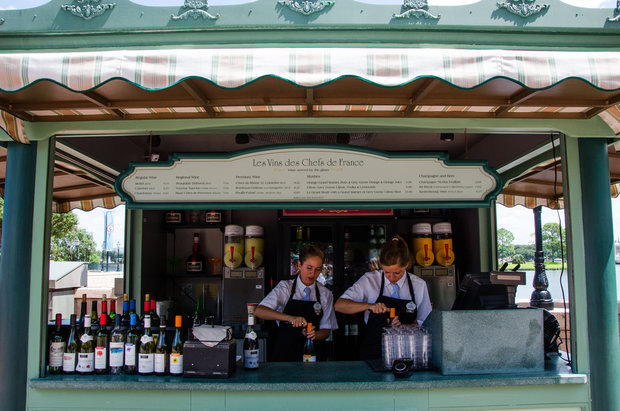
When Hugh walks through Epcot he must be reminded of the groundwork he and the Imagineers laid down. Hugh even played a role in small things like food carts. He said, “I was looking at developing a food carts program. Epcot was such a success we had a hard time feeding everybody…At the time in Florida you could only grill hot dogs and serve popcorn. So when we introduced food carts that could cook food like crepes, we had to build food carts that would be approved by the health department in Florida. It was a tough challenge.” Thinking about Epcot today, there are food carts surrounding the World Showcase, especially for Food and Wine Festival. I asked him if the work he did allowed Food and Wine Festival to be a possibility to which he responded, “I think long term it did. We met these two brothers Stan and Dan out in Colorado, and they built the first food carts for Epcot. It allowed us to change the way people thought of our food. And the President of the company at the time said ‘food is part of the show’ so our job was to serve people food in an innovative way.”
Life After Imagineering
Hugh explained to me that Disney’s restrictions come in when the budget becomes a factor. I can imagine it can be frustrating for the most creative people in the world to not have their designs finished. Hugh explained that some of these limitations are what pushed him to eventually leave the Walt Disney Company. He said, “The reasons I left Imagineering at a young age was because I wanted it to be more of that groundbreaking stuff. I felt like I had gone as far as I could. I was only 27 years old. I decided to leave the company and do things on my own. I also didn’t get along with Michael Eisner unfortunately. I met him twice, and I thought he had a lot different approach on things then I did.”
The combination of all those things are what made Hugh leave his childhood dream job. He said, “That’s when I decided it might be the right time to start my own business, and it worked out great.”
I asked Hugh if there was anything he draws upon from his days being an Imagineer that he uses at today? He said, “Yes, I do. Disney did such a good job with storytelling. The way Disney always focuses on guest experience through storytelling was so important to learn. I was one of the art directors with Tony Baxter in Disneyland in 1984/1985, and we would walk in the park everyday just to see the guest reactions. Designing it for the guest’s perspective has always been the key for Disney.”
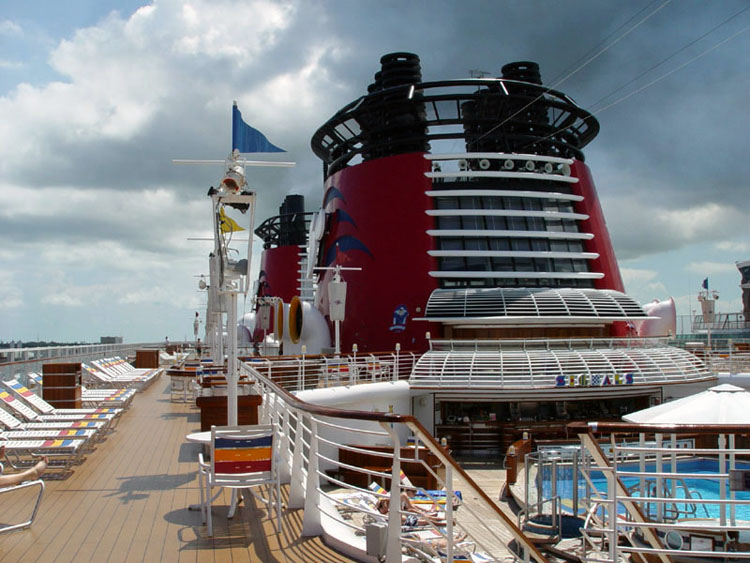
Even though Hugh Darley hasn’t worked for the Walt Disney Company for some time now, he feels honored when Disney recognizes the work he has done outside of the company. He explains “We built a location called Point Icy Strait (later changed to Icy Strait Point) in Alaska, and Disney Cruise Line just signed on to dock there…next year in 2017.” Hugh’s company, IDEA, Inc., led by Rob Coles and himself, designed Point Icy Strait, and as Hugh said, “there is no bigger compliment then when Disney comes to where you designed something.” That is just one of the many locations that Hugh’s company has designed that Disney calls upon, and it is something he is understandably very honored by. A few of the projects Hugh and his company has designed were in the Caribbean. He had me laughing when talking about it saying “I’m building the real ‘Pirates of the Caribbean,’ and Disney is coming!”
Hugh had so many interesting stories about the projects that he has gotten to work on, whether it be for Disney or for his own company. We talked a little bit about another interesting project he worked on. Hugh explained, “I got to work for George Lucas around 1996 or 1997. We converted the airport…which they would later use for Harry Potter…into the sound stages for Star Wars Phantom Menace, so we had some time working on the sets, and at the studios for George Lucas, and that was pretty exciting.”
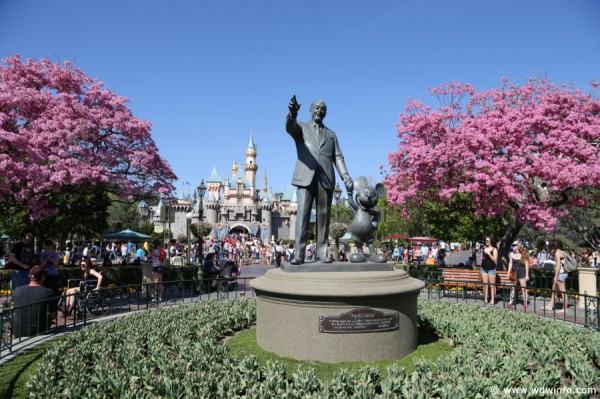
Finally, I asked Hugh a silly question, which was whether he preferred Disneyland or Walt Disney World. He quickly responded with “Disneyland because of the ambiance.” He also added “When I was an art director, and I could walk around the park before it opened in the morning. There were a couple times I got to walk around with Michael Jackson in the morning before the park opened.”
“It is an amazing park to walk around just being a single person in that park…it is just a fabulous location. It was a dream for me.” Hugh said.
To find out more about Hugh Darley look at his About Me page on his website www.ideaorlando.com