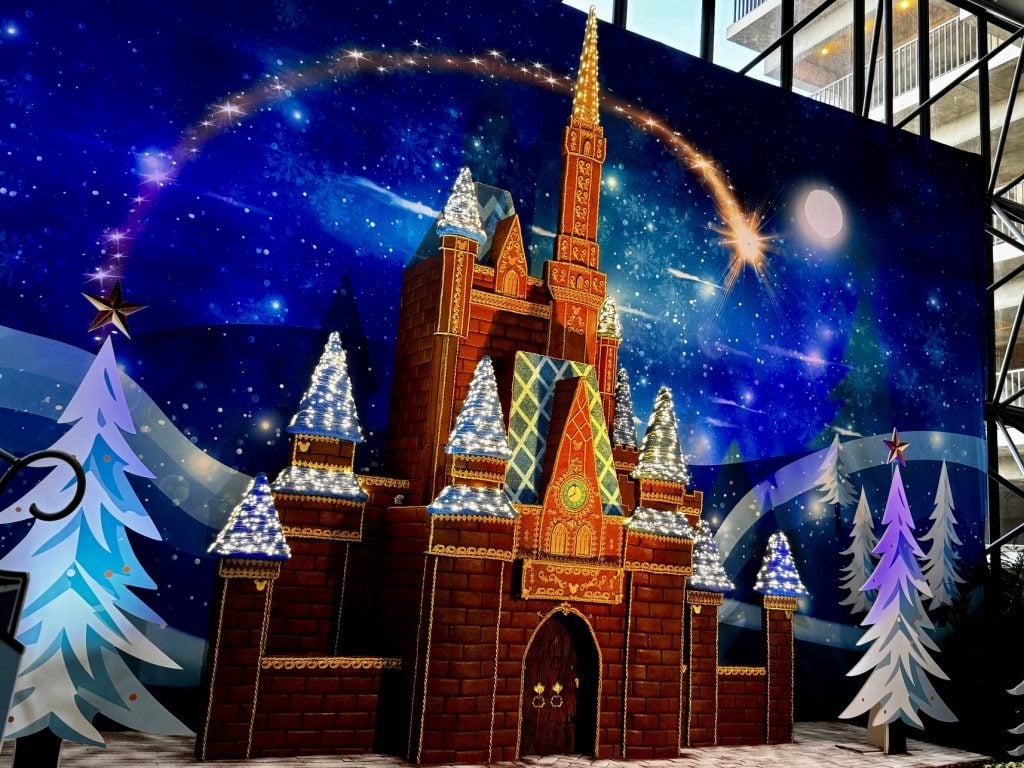
If you’ve seen this year’s holiday gingerbread displays around Walt Disney World, you’ve probably spent some time admiring the scale, detail, and sheer amount of sugar involved. From glowing, intricate castles and spinning carousels, to the many triangle cookies that make up Spaceship Earth, Disney’s pastry teams create impressive gingerbread displays, turning familiar icons into seasonal showpieces.


I don’t know about you, but I’ve often wondered what actually happens to these massive gingerbread creations after the holidays are over… Turns out, Disney has pulled back the curtain before with a behind-the-scenes look at how the displays are taken down, reused, and even recycled. The process still takes place after each holiday season concludes. Let’s take a look!
An Un-Bee-Lievable Tradition
Once the holidays wrap up, culinary cast members step in to carefully dismantle the displays. All edible components, including gingerbread pieces and decorative elements, are removed and placed into food waste bins. Those bins are then sent off for composting. Chef Kristine Farmer, a pastry chef at Disney’s Grand Floridian Resort and Spa, confirmed that this process happens every year to ensure the food materials are handled responsibly.
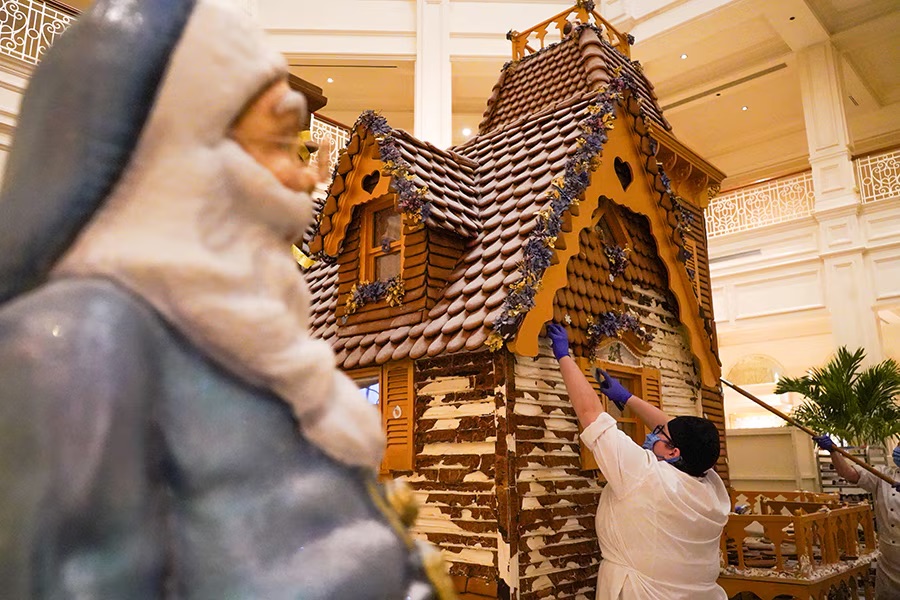
— There’s no life-size gingerbread house at the Grand Floridian this year, but there’s still plenty of displays to dismantle and recycle around WDW!
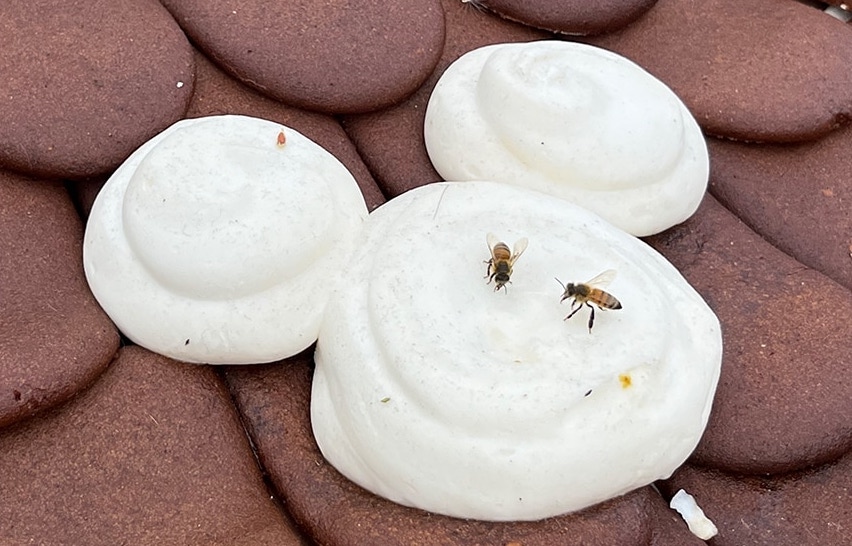
The most interesting part happens after the edible pieces are gone. About a decade ago, cast members discovered that the wooden frames used to support the gingerbread houses still had traces of frosting left behind. Rather than immediately cleaning them, the frames are transported to their own tree farm, where local bees are allowed access.
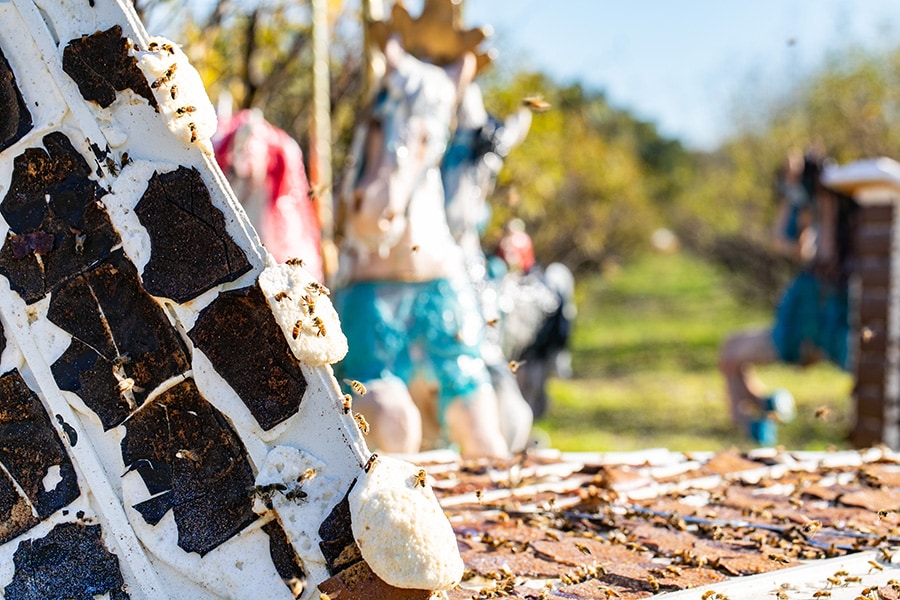
— Peep that carousel horse confection in the background, too!
The bees feed on leftover sugar from the frosting, using it as an energy source before heading back out to pollinate and produce honey.
Once the bees move on, the wooden frames are hot-washed to remove any remaining sugar and residue. After cleaning, the frames are placed into storage and reused for future holiday displays, reducing the need to build new structural supports each year.
‘Seeing how bees respond to the gingerbread displays is such a spectacular example of the impact an individual can have on the behavior of bees and wildlife,’ said Dr. Zak Gezon, Conservation Manager for Disney’s Animals, Science and Environment. ‘You can even recreate something like this at home in a way that’s beneficial to native pollinators by creating your own pollinator garden using beautiful flowering plants.’
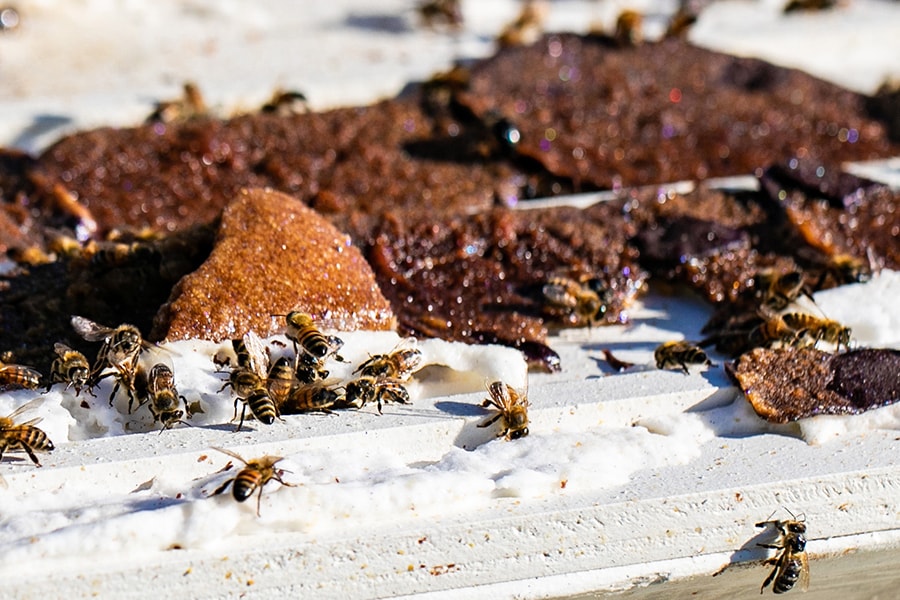
From pleasing humans to honeybees, this rare look reveals how Disney’s iconic holiday showpieces continue to serve a purpose long after the seasonal festivities and photo ops. We’re always interested in what happens behind the scenes, beyond the onstage magic, and this is one of those processes that’s more thoughtful than most might expect.
Can you bee-lieve it?